TL;DR
Claude Code is not terminal-only. It runs on the same engine in the terminal CLI, the VS Code, Cursor and JetBrains extensions, the desktop app, the web at claude.ai/code, the iOS app, Slack and Chrome. Your CLAUDE.md files, settings and MCP servers work across all of them.
Claude Code is not a terminal-only tool. It is an agentic coding tool available across several surfaces: your terminal, your IDE, a dedicated desktop app and your browser. Each surface connects to the same underlying Claude Code engine, and that changes how you work.
SFEIR Institute trainings
Claude Code Training
1 day · Fundamentals
AI-Augmented Developer
2 days · Intermediate
Why does Claude Code exist on so many surfaces?
The core idea is stated plainly in the official documentation: each surface connects to the same underlying Claude Code engine. In practice, your CLAUDE.md files, settings and MCP servers work across all of them. You configure once, then work everywhere.
Your sessions are not locked into a single environment either. You can kick off a long-running task on the web, then pull it into your terminal with claude --teleport. You can hand off a terminal session to the desktop app with /desktop for visual diff review.
Which Claude Code surface should you choose?
The right choice depends on the task in front of you:
- Living in the terminal and chaining commands? Stay in the terminal CLI.
- Want to see changes inline inside your editor? Use the VS Code, Cursor or JetBrains extension.
- Want multiple sessions in parallel with visual diff review? Move to the desktop app.
- Don't have the repo locally, or working from mobile? Use the web.
- Want to automate or route tasks from chat and CI? Wire up Slack and GitHub.
Our comparison page breaks down the decision criteria surface by surface.
The terminal CLI
The terminal is the most full-featured version of Claude Code. You edit files, run commands and manage your entire project from the command line. Installation is a single line:
curl -fsSL https://claude.ai/install.sh | bash
Then you start it in any project:
cd your-project
claude
The CLI follows the Unix philosophy, so you can compose it with other tools through pipes, for example tail -200 app.log | claude -p "Slack me if you see any anomalies". See the full details on the terminal page.
The VS Code, Cursor and JetBrains extension
The VS Code extension brings inline diffs, @-mentions, plan review and conversation history directly into your editor. It also installs for Cursor. For JetBrains IDEs (IntelliJ IDEA, PyCharm, WebStorm), the plugin offers interactive diff viewing and selection context sharing.
All the details are on the IDE page.
The desktop app
The desktop app is a standalone program for running Claude Code outside your IDE or terminal. You review diffs visually, run multiple sessions side by side, schedule recurring tasks and kick off cloud sessions. It is available for macOS (Intel and Apple Silicon), Windows x64 and Windows ARM64.
Learn more on the desktop page.
The web and mobile
The web runs Claude Code in your browser with no local setup. It is ideal for kicking off long-running tasks and checking back when they're done, working on repos you don't have locally, or running multiple tasks in parallel. Start at claude.ai/code. The web is also available on desktop browsers and in the Claude iOS app.
More details on the web and mobile page.
Chat and CI
Claude Code also integrates with team workflows. In Slack, you mention @Claude with a bug report and get a pull request back. In the browser, the Chrome integration lets you debug live web applications. In CI, GitHub Code Review provides automatic review on every PR, and you automate code review and issue triage with GitHub Actions or GitLab CI/CD.
See the chat and CI page.
How do you move a session between surfaces?
Sessions aren't tied to a single surface. You can:
- Continue a local session from your phone or another device with Remote Control.
- Kick off a long-running task on the web or iOS app, then pull it into your terminal with
claude --teleport. - Hand off a terminal session to the desktop app with
/desktopfor visual diff review.
What stays shared everywhere
The essential takeaway: whatever surface you use, you keep the same configuration foundation. Your CLAUDE.md files, settings and MCP servers work across all of them. That means your coding standards, permissions and integrations follow you from terminal to web with no reconfiguration.
To go further, see installation and first launch, headless mode and CI/CD and the surfaces FAQ.
Recent articles about Claude
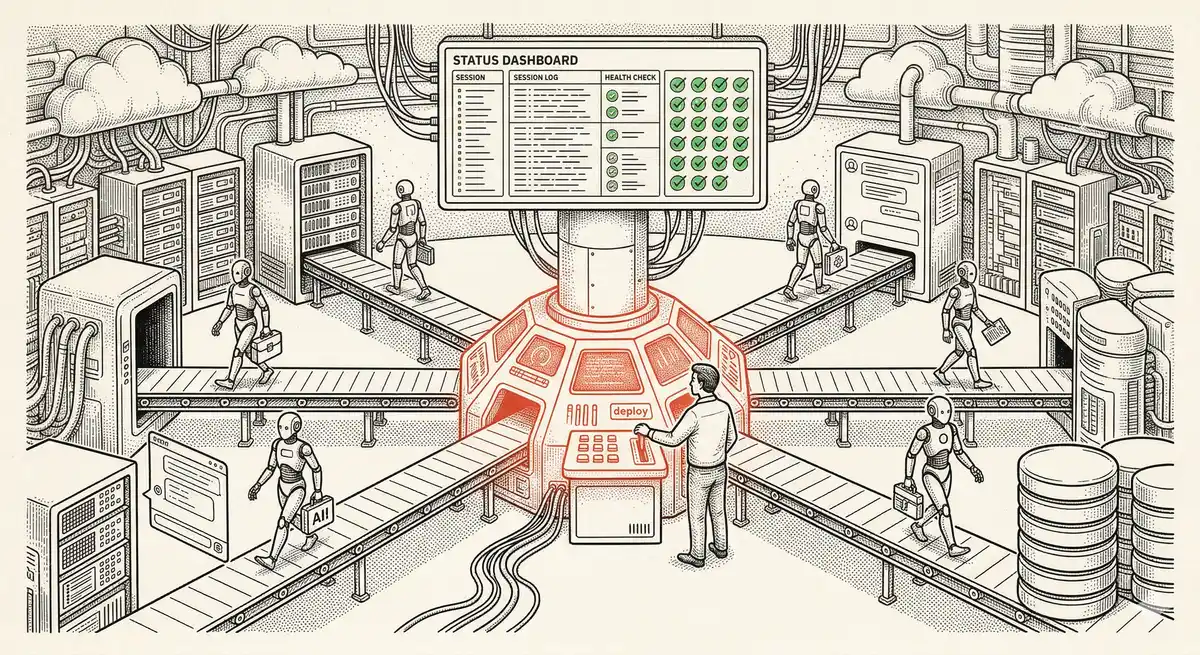
Claude Managed Agents: Anthropic's Platform for Production Agent Deployment
Anthropic launches Managed Agents: a cloud platform for deploying AI agents in production. Secure sandbox, checkpointing, multi-agent, autonomous sessions lasting hours. Notion, Rakuten, Asana and Sentry already use it.
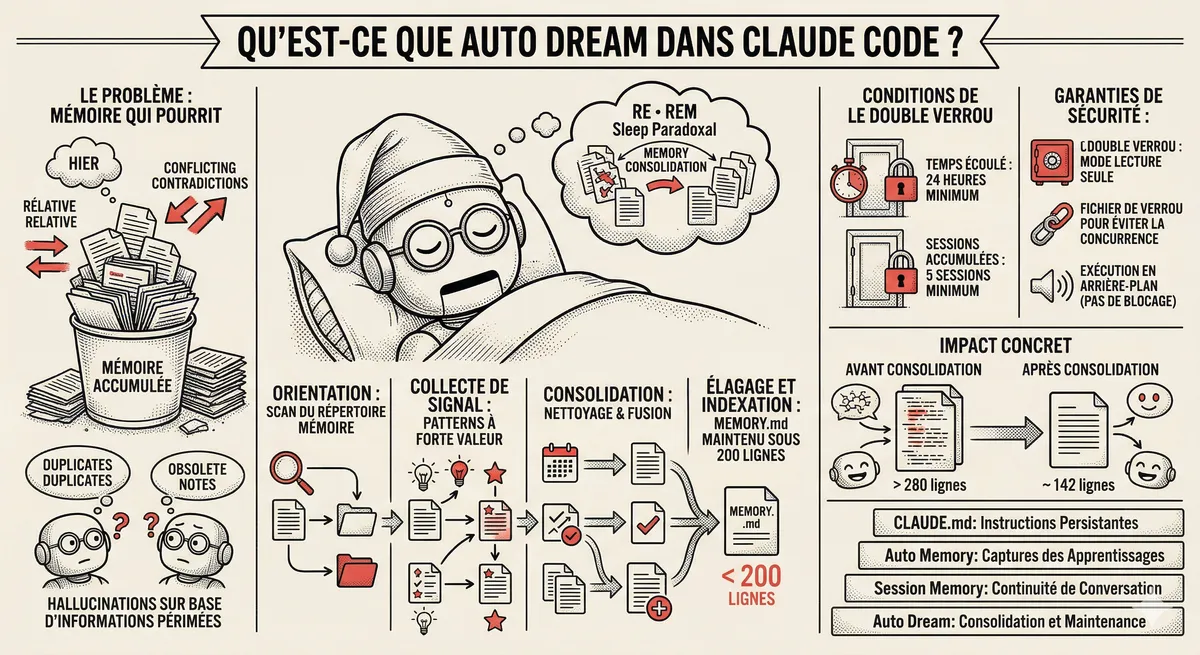
Claude Code Dream & Auto Dream: Automatic Memory Consolidation
After 20 sessions, Auto Memory notes become a mess. Auto Dream solves this by automatically consolidating Claude Code's memory: deduplication, stale entry removal, relative-to-absolute date conversion.
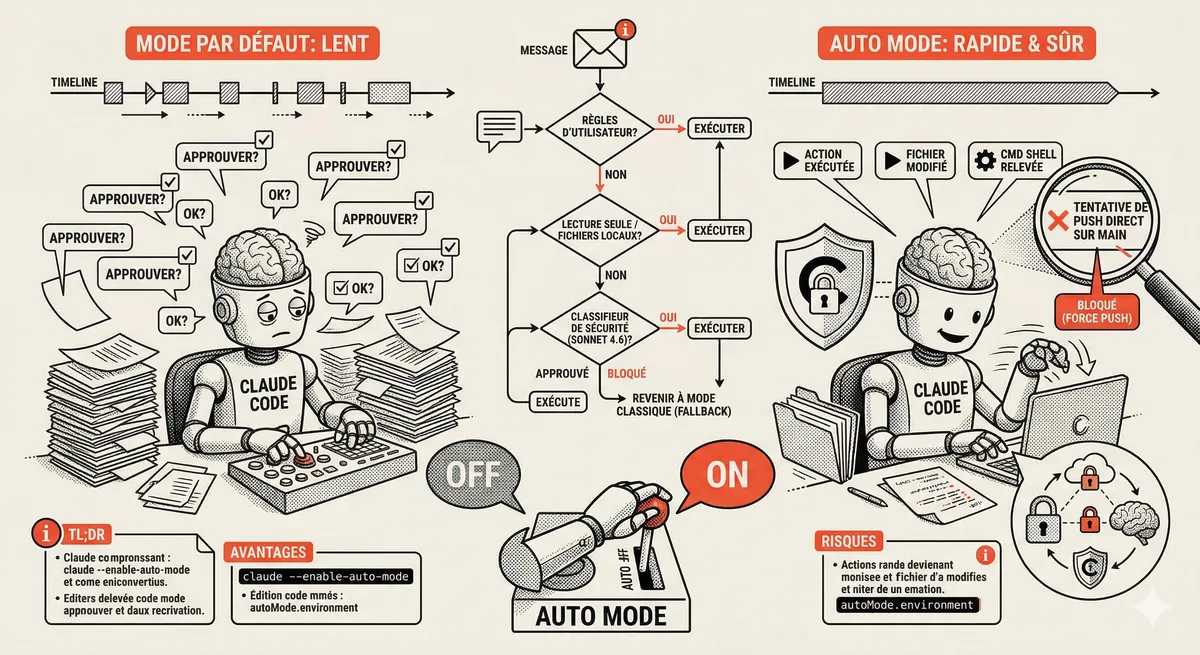
Claude Code Auto Mode: Autonomy Without the Risk
Auto Mode in Claude Code eliminates permission interruptions while keeping a safety net. A classifier analyzes every action before execution and blocks destructive operations. The sweet spot between approving everything and letting everything through.
Claude Code Training
Master Claude Code fundamentals in 1 day with our expert instructors. 60% hands-on practice on real-world cases.
Discover the training