TL;DR
Claude Code reaches well beyond the terminal and the IDE. From Slack, a single @Claude mention detects coding intent and opens a Claude Code session on the web ready to create a pull request. In Chrome, the extension lets Claude test and debug your live web apps by reading the console and the DOM. In CI, GitHub Actions, GitLab CI/CD and Code Review automate implementation and review of your pull requests. The same engine, your CLAUDE.md files and your MCP servers work everywhere.
Claude Code is not limited to the terminal. It runs on the same engine across every surface, and your CLAUDE.md files, your settings and your MCP servers work everywhere. This page covers three collaborative and automated surfaces: Slack, where a @Claude mention opens a pull request, Chrome, where Claude debugs your live web apps, and CI, where GitHub Actions, GitLab CI/CD and Code Review automate implementation and review of your pull requests.
To place these surfaces alongside the others (terminal, IDE, Desktop, web), see the parent page Surfaces and environments.
SFEIR Institute trainings
Claude Code Training
1 day · Fundamentals
AI-Augmented Developer
2 days · Intermediate
How do you use Claude Code from Slack?
Claude Code in Slack brings the power of the tool directly into your workspace. When you mention @Claude with a coding task, Claude automatically detects the intent and creates a Claude Code session on the web. You delegate development work without leaving your team conversation.
Setup follows a few steps. A workspace administrator installs the Claude app from the Slack App Marketplace. You then connect your Claude account from the App Home tab of the app in Slack. You configure Claude Code on the web at claude.ai/code by connecting your GitHub account and at least one repository. Finally, you invite Claude to a channel with the Slack command /invite @Claude.
Two routing modes exist in App Home:
| Mode | Behavior |
|---|---|
| Code only | All @Claude mentions are routed to Claude Code sessions |
| Code + Chat | Claude analyzes each message and routes between Claude Code (coding tasks) and Claude Chat (writing, analysis, general questions) |
The flow is straightforward. You mention @Claude with a coding request in a public or private channel. Claude analyzes the message, detects the intent, creates a session on claude.ai/code, and posts progress updates to your Slack thread. When finished, it mentions you with a summary and action buttons: "View Session" opens the full transcript in the browser, and "Create PR" creates a pull request from the session's changes.
A few documented current limitations: Claude Code in Slack works only in channels (not direct messages), supports GitHub repositories only, and each session can create one pull request. Sessions run under each user's own Claude account and count against their usage limits.
Key takeaway: in Slack, @Claude detects a coding task, opens a Claude Code session on the web, and the "Create PR" button turns the result into a pull request.
How do you debug a live web app with Claude Code in Chrome?
Claude Code integrates with the Claude in Chrome browser extension to give you automation capabilities from the CLI or the VS Code extension. You build your code, then test and debug it in the browser without switching contexts. Claude opens new tabs for browser tasks and shares your browser's login state, so it can access any site you are already signed into.
Chrome integration is in beta. It currently works with Google Chrome and Microsoft Edge. On prerequisites, you need the Claude in Chrome extension (version 1.0.36 or higher), Claude Code (version 2.0.73 or higher) and a direct Anthropic plan (Pro, Max, Team or Enterprise).
To get started in the CLI, launch Claude Code with the --chrome flag:
claude --chrome
You can also enable Chrome from an existing session with the /chrome command. To avoid passing --chrome each session, run /chrome and select "Enabled by default". In the VS Code extension, Chrome is available whenever the Chrome extension is installed, with no additional flag.
Among the documented capabilities: live debugging (read console errors and DOM state, then fix the code), design verification, web app testing (form validation, visual regressions, user flows) and data extraction. Here is a typical debugging example you type in the prompt:
Open the dashboard page and check the console for any errors when
the page loads.
Claude reads the console messages and can filter for specific patterns or error types. When it encounters a login page or CAPTCHA, it pauses and asks you to handle that step manually. Run /chrome at any time to check the connection status, manage per-site permissions, or reconnect the extension.
Key takeaway: claude --chrome or the /chrome command connects Claude Code to your browser to read the console, inspect the DOM, and fix the code that caused the error.
How do you automate pull requests with GitHub Actions?
Claude Code GitHub Actions brings automation to your GitHub workflow. With a simple @claude mention in an issue or pull request, Claude analyzes your code, creates pull requests, implements features and fixes bugs, all while following your CLAUDE.md file.
The fastest setup runs through the terminal. Open claude and run the slash command:
/install-github-app
This command guides you through installing the GitHub app and configuring the required secrets. You must be a repository admin. Manually, you install the Claude app on your repository, add the ANTHROPIC_API_KEY secret to the repository secrets, then copy the workflow file into .github/workflows/. Here is a minimal workflow that responds to @claude mentions in comments:
name: Claude Code
on:
  issue_comment:
    types: [created]
  pull_request_review_comment:
    types: [created]
jobs:
  claude:
    runs-on: ubuntu-latest
    steps:
      - uses: anthropics/claude-code-action@v1
        with:
          anthropic_api_key: ${{ secrets.ANTHROPIC_API_KEY }}
In an issue or PR comment, you then write natural-language instructions:
@claude implement this feature based on the issue description
@claude fix the TypeError in the user dashboard component
The action automatically detects the mode (responding to mentions, or running immediately with a prompt). The claude_args parameter accepts any Claude Code CLI argument, for example --max-turns, --model or --mcp-config. Never hardcode an API key in the workflow file: always use GitHub Secrets.
Key takeaway: /install-github-app configures the integration in minutes, and @claude in an issue or PR triggers implementation and pull request creation.
What do GitLab CI/CD and GitHub Code Review add?
Beyond GitHub Actions, Claude also integrates with GitLab CI/CD for GitLab pipelines. The official documentation describes a self-hosted Claude integration for your GitLab pipelines, in the same spirit as GitHub Actions but on GitLab infrastructure.
GitHub Code Review is a managed service that posts automatic reviews on every pull request, without a trigger. A fleet of specialized agents examines the changes in the context of your full codebase, looking for logic errors, security vulnerabilities and subtle regressions. Findings are posted as inline comments, tagged by severity level. Code Review is in research preview for Team and Enterprise subscriptions.
An admin enables Code Review once for the organization from claude.ai/admin-settings/claude-code and chooses the repositories and the per-repo trigger: "Once after PR creation", "After every push" or "Manual". You also trigger a review manually with two PR comment commands:
| Command | Effect |
|---|---|
@claude review | Starts a review and subscribes the PR to reviews on subsequent pushes |
@claude review once | Starts a single review without subscribing the PR to future pushes |
You tune what Claude flags with a CLAUDE.md or REVIEW.md file at the repository root. To review a diff locally without installing the GitHub App, run the /code-review command in any Claude Code session: pass --comment to post findings as PR comments, or --fix to apply the fixes to your working tree.
Key takeaway: GitHub Code Review posts automatic inline reviews by severity, GitLab CI/CD covers GitLab pipelines, and /code-review reviews a diff locally.
Which surface should you choose and where to go next?
Slack fits when context already exists in a team discussion and you want to kick off a task asynchronously. Chrome serves to test and debug a web app while sharing the browser's login state. CI (GitHub Actions, GitLab CI/CD, Code Review) automates implementation and review on every pull request.
To compare these collaborative surfaces with the interactive ones, see the terminal CLI and the IDE (VS Code, Cursor, JetBrains). The web at claude.ai/code is the surface that underpins sessions opened from Slack.
To go deeper on automation, headless mode and CI scripting, see the pillar Claude Code headless and CI/CD, which details non-interactive execution and integration into your pipelines.
Key takeaway: Slack for asynchronous delegation, Chrome for web debugging, CI for pull request automation. The same engine, your CLAUDE.md files and your MCP servers follow you on every surface.
Recent articles about Claude
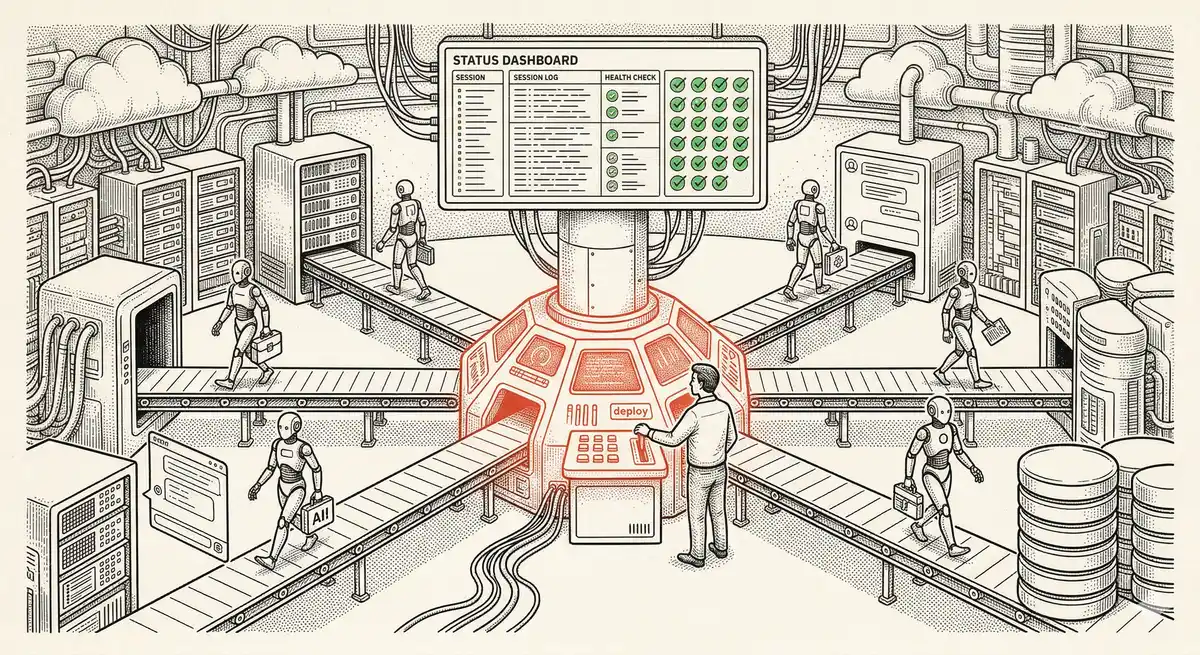
Claude Managed Agents: Anthropic's Platform for Production Agent Deployment
Anthropic launches Managed Agents: a cloud platform for deploying AI agents in production. Secure sandbox, checkpointing, multi-agent, autonomous sessions lasting hours. Notion, Rakuten, Asana and Sentry already use it.
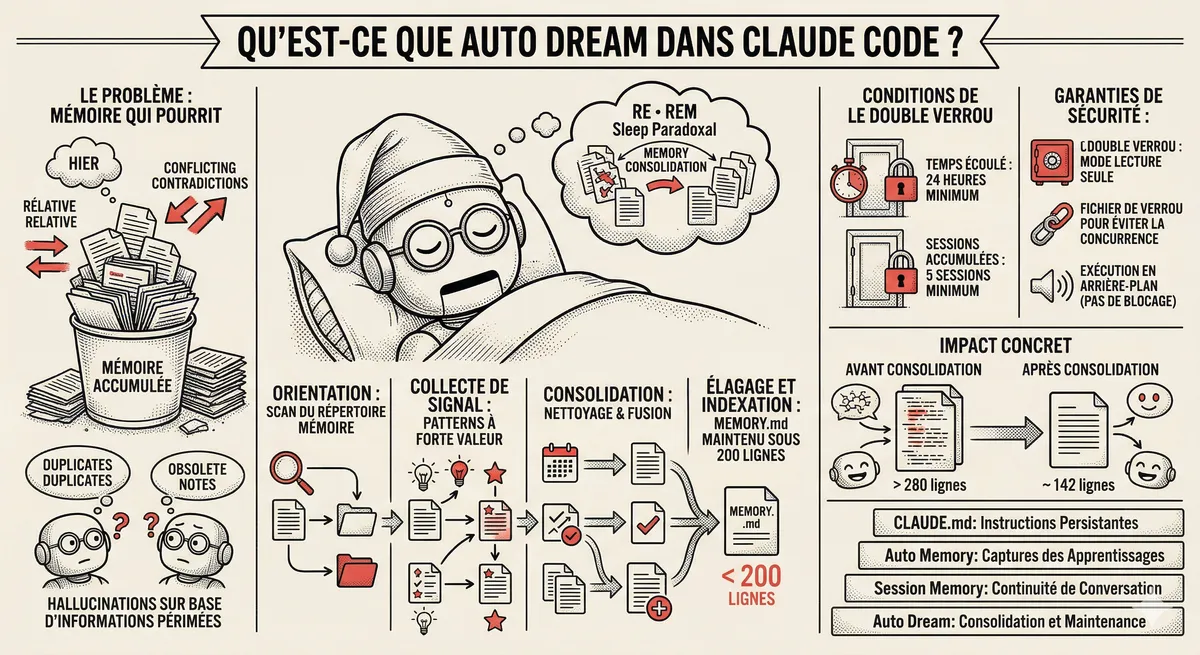
Claude Code Dream & Auto Dream: Automatic Memory Consolidation
After 20 sessions, Auto Memory notes become a mess. Auto Dream solves this by automatically consolidating Claude Code's memory: deduplication, stale entry removal, relative-to-absolute date conversion.
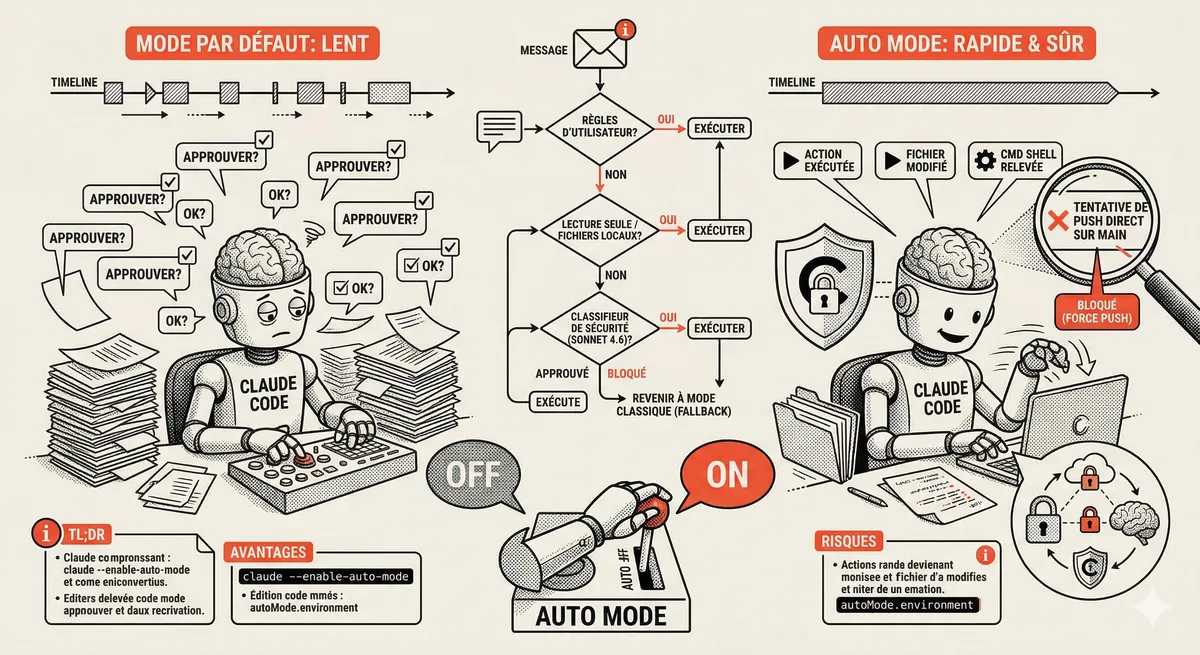
Claude Code Auto Mode: Autonomy Without the Risk
Auto Mode in Claude Code eliminates permission interruptions while keeping a safety net. A classifier analyzes every action before execution and blocks destructive operations. The sweet spot between approving everything and letting everything through.
Claude Code Training
Master Claude Code fundamentals in 1 day with our expert instructors. 60% hands-on practice on real-world cases.
Discover the training