TL;DR
SFEIR Institute's Claude Code training enables you to master Anthropic's agentic AI assistant in 1 day with 80% hands-on practice guided by experts. This complete guide supports your skill development before, during, and after the training. Claude Code has seen rapid adoption among development teams and become an essential developer productivity tool.
Claude Code has emerged as one of the most widely adopted AI development tools alongside GitHub Copilot and Cursor. A large share of engineering teams now use AI coding tools daily, and Claude Code has seen rapid adoption among development teams.
SFEIR Institute's Claude Code training enables you to master this tool in 1 day, with 80% hands-on practice guided by experts. This complete guide supports your skill development before, during, and after the training.
This comprehensive guide covers 12 structured modules, from first launch to automated CI/CD pipelines. Check out the complete learning path to visualize the recommended progression.
SFEIR Institute trainings
Claude Code Training
1 day · Fundamentals
AI-Augmented Developer
2 days · Intermediate
How does Claude Code work and why adopt it?
Claude Code is a development agent that reads, modifies, and creates files directly from your terminal. It goes beyond autocompletion: it executes commands, navigates through code, and proposes complete refactoring operations.
The underlying principle relies on agentic coding, an approach where AI acts autonomously on your codebase while requesting your approval at key steps.
| Feature | Claude Code | Traditional IDE Extension |
|---|---|---|
| Environment | Native terminal | IDE plugin |
| Analysis scope | Entire project | Open file |
| Possible actions | Read, write, shell commands | Inline suggestions |
| Git context | Built-in (diff, commits, PR) | Limited or absent |
In practice, Claude Code can handle large codebases and many refactoring tasks autonomously, requesting your approval at key steps.
Run the claude command in any Git directory to start an interactive session. The tool automatically indexes your project structure.
cd my-project
claude
Key takeaway: Claude Code is a full-featured terminal agent that analyzes, modifies, and executes, not a simple completion assistant.
What are the prerequisites for this training?
Verify that you have the following elements before getting started. No prior experience with AI tools is required, but solid development fundamentals are expected.
| Prerequisite | Minimum level | Details |
|---|---|---|
| Terminal / CLI | Basic comfort | Navigation, common commands |
| Git | Daily use | Commits, branches, merge |
| Node.js | v18+ installed | Node.js 22 LTS recommended |
| Code editor | VS Code, Vim, or other | Standard configuration |
| Anthropic account | Active account | Pro, Max, Team, or Enterprise plan (or an Anthropic API key / Console account) |
In concrete terms, you need to know how to create a Git branch, run an npm install, and navigate a terminal without assistance. If you are new to development, first consult the beginner's guide which lays the necessary foundations.
The Claude Code course itself does not require knowledge of machine learning or prompt engineering. You will learn these applied skills directly during the training.
Key takeaway: Git, Node.js 22 LTS, and a working terminal are the only essential technical prerequisites.
Who is this Claude Code training for?
This training is aimed at four main profiles. Identify your category to adjust your pace of progression.
- Front-end and back-end developers - You write code daily and want to accelerate your development cycles. Claude Code can substantially reduce scaffolding time.
- Tech leads and architects - You oversee teams and evaluate productivity tools. This training gives you the keys to deploy Claude Code at scale.
- DevOps and SRE - You automate pipelines and maintain infrastructure. Claude Code's headless and CI/CD mode integrates directly into your existing workflows.
- Developers transitioning to AI - You are exploring AI-augmented roles. Check out the career guide to understand how this skill enhances your profile.
Many developers now use at least one AI tool in their daily workflow. Mastering Claude Code positions you on a skill sought by recruiters. Explore the common interview questions to prepare.
Key takeaway: developers, tech leads, DevOps, and transitioning profiles. All code practitioners benefit from this training.
What is the detailed program of the 12 modules?
The program covers all of Claude Code in 12 progressive modules. Each module combines brief theory and hands-on exercises on real projects.
Module 1 - What is agentic coding?
This module lays the conceptual foundations. You will discover the difference between autocompletion, AI chat, and autonomous code agents. The full module on agentic coding details the paradigms and limitations of each approach.
Code agents like Claude Code make autonomous decisions about which files to read, which modifications to make, and which commands to execute. In practice, an agent can autonomously complete more complex, multi-step tasks than a traditional chat assistant.
Module 2 - Installation and first launch
Install Claude Code via npm with a single command. The module covers macOS, Linux, and WSL2 on Windows configurations.
npm install -g @anthropic-ai/claude-code
claude --version
Claude Code requires Node.js 18 or higher. The step-by-step installation guide details solutions to common problems: corporate proxy, npm permissions, API key configuration.
Module 3 - Your first conversations
You will learn to formulate effective requests. A well-structured prompt reduces the number of back-and-forth iterations. Test concrete scenarios: bug fixing, feature addition, code explanation. Find practical examples in the module on first conversations.
Module 4 - Essential slash commands
Claude Code offers slash commands to control its behavior: /compact to reduce context, /clear to reset the session, /cost to track token consumption.
> /compact # Summarizes the conversation to free up context
> /cost # Shows the cumulative cost of the session (alias for /usage)
> /doctor # Diagnoses the installation
The slash commands reference documents each command with concrete use cases.
Module 5 - The CLAUDE.md memory system
The CLAUDE.md file is Claude Code's persistent memory system. Create this file at the root of your project to store team conventions, architectural patterns, and business rules.
# CLAUDE.md
- Framework: Next.js 14 with App Router
- Tests: Vitest + Testing Library
- Style: Tailwind CSS, no CSS modules
- Convention: file names in kebab-case
In practice, a well-structured CLAUDE.md file reduces repeated manual corrections. The dedicated module on the memory system explains prioritization strategies and best practices.
Module 6 - Permissions and security
Claude Code executes commands on your machine. Configure permission levels (read-only, controlled write, supervised execution) to adapt behavior to your security context. The permissions and security module covers enterprise policies and command auditing.
Module 7 - Context management
Claude Code's context window depends on the underlying model. Current models (Opus 4.6+ and Sonnet 4.6) support up to 1M tokens, while older models and the Bedrock/Vertex/Foundry defaults use a 200K-token window. You will learn to use /compact and splitting strategies to maintain relevance during long sessions. The context management guide details critical thresholds and metrics to monitor.
| Strategy | Tokens saved | Impact on quality |
|---|---|---|
Regular /compact | High | Minimal if well framed |
Well-configured .gitignore | Moderate | None on relevant files |
| Splitting into subtasks | High | Improves accuracy |
Module 8 - Git integration
Claude Code natively handles Git operations: branch creation, commits with structured messages, conflict resolution, and pull request creation. In practice, many using Claude Code's Git integration report spending less time on code reviews.
> Create a feature/auth-oauth2 branch and implement the OAuth2 flow
> Commit with a conventional message
> Create a PR with a summary of changes
Module 9 - MCP: Model Context Protocol
MCP is an open protocol that connects Claude Code to external data sources: databases, APIs, remote file systems. Configure MCP servers to extend your agent's capabilities. The MCP module covers the client-server architecture and common integrations (PostgreSQL, Slack, GitHub).
Module 10 - Headless mode and CI/CD
Run Claude Code in your continuous integration pipelines without human interaction. The headless mode accepts a prompt as input and produces a structured result as output.
claude -p "Analyze this diff and check for security vulnerabilities" --output-format json
The headless mode guide shows configuration examples for GitHub Actions, GitLab CI, and Jenkins. An automated security analysis runs quickly on a typical diff, making it practical to gate pull requests.
Module 11 - Custom commands and skills
Create your own slash commands by placing Markdown files in .claude/commands/. Each command becomes a reusable shortcut for your recurring workflows. Find advanced patterns in the custom commands module.
Module 12 - Advanced best practices
This final module consolidates your knowledge with multi-agent orchestration strategies, monorepo management, and API cost optimization. The advanced best practices and the best practices guide provide actionable checklists.
To go further, explore the Surfaces and environments hub, which details where to run Claude Code: terminal, IDE, desktop app, and web version.
Key takeaway: 12 progressive modules cover the full spectrum: from installation to CI/CD automation, including security and MCP.
How does the training work in practice?
The SFEIR Institute Claude Code training takes place over 1 intensive day, either in-person or remote. Each module alternates between 20% theory and 80% hands-on practice on real projects.
| Criteria | Details |
|---|---|
| Duration | 1 day (7 hours) |
| Format | In-person or remote |
| Level | Beginner to intermediate |
| Prerequisites | Git, Terminal, Node.js 18+ |
| Participants | 6 to 12 people |
| Certification | SFEIR skills certificate |
You work on your own machine with your usual development environment. The hands-on labs include the complete configuration of Claude Code, creating a CLAUDE.md file for a real project, and automating a CI/CD pipeline.
If you want to go further, the AI-Augmented Developer training offers 2 days of intensive practice covering Claude Code and other AI tools for development. The AI-Augmented Developer - Advanced version deepens in 1 day the techniques of multi-agent orchestration and production deployment.
Key takeaway: 1 day, 80% hands-on labs, on your own development environment.
What concrete results to expect after the training?
Participants leave with immediately applicable skills. Here are the kinds of outcomes reported by previous cohorts.
- Significant reduction in development time on scaffolding and refactoring tasks
- Creating structured commits and documented pull requests in just a few moments
- Autonomous configuration of Claude Code with persistent memory (CLAUDE.md) and custom commands
- Working integration into a CI/CD pipeline (GitHub Actions or GitLab CI)
- Mastery of the essential slash commands
Developers trained in agentic coding deliver more work each sprint without an increase in bugs detected during review. The tool comparison helps you position Claude Code relative to market alternatives.
Concretely, after this day you will know how to launch Claude Code on any project, structure your prompts to get precise results from the first iteration, and automate repetitive tasks in your workflow.
Key takeaway: measurable productivity gains from the very first day of use under real conditions.
What are the frequently asked questions about Claude Code?
Do you need a credit card to use Claude Code?
Claude Code requires an active Anthropic plan (Pro or Team, see the official pricing). The Pro plan includes a monthly quota sufficient for individual use. Check the current prices on the Anthropic website as they change regularly.
Does Claude Code work with all programming languages?
Claude Code works with virtually any programming language, including JavaScript, TypeScript, Python, Go, Rust, Java, C#, PHP, and Ruby. It analyzes configuration files specific to each ecosystem (package.json, pyproject.toml, Cargo.toml). The use cases guide details performance by language.
Can Claude Code be used in enterprise settings?
The Team plan and Enterprise plan offer confidentiality guarantees: your data is not used for model training. Configure the permissions and security policies to meet your IT department's requirements.
How to resolve common errors?
The most frequent problems involve npm permissions, corporate proxies, and Node.js version conflicts. The troubleshooting guide lists the 20 most common errors with step-by-step solutions.
What is the difference between Claude Code and GitHub Copilot?
Claude Code is a terminal agent that executes actions (read, write, commands) on your entire project. GitHub Copilot is primarily an autocompletion tool integrated into the IDE. The detailed comparison analyzes the strengths and limitations of each tool across 12 criteria.
How much does using Claude Code cost in tokens?
Token consumption varies widely depending on project size and session length. Run /usage (or /cost) inside a session to see your actual consumption. With the Pro plan, day-to-day work is typically covered by the included quota at no extra charge. Beyond the quota, costs via the direct API depend on the model and the volume of tokens processed, so monitor your spend with /usage.
Key takeaway: check out the salary guide to evaluate the return on investment of this skill on your compensation.
How to get started with Claude Code right now?
Install Claude Code in 3 steps and launch your first session in just a few minutes.
- Install Node.js 22 LTS from the official website
- Run
npm install -g @anthropic-ai/claude-codein your terminal - Launch
claudein an existing Git directory
# Complete installation in 3 commands
nvm install 22
npm install -g @anthropic-ai/claude-code
cd your-project && claude
Your first action: ask Claude Code to analyze your project with the prompt "Describe the architecture of this project and identify possible improvements." You will get a complete diagnosis in moments.
To structure your learning, follow the recommended learning path which orders the 12 modules in an optimal progression. If you prefer guided instruction, sign up for the SFEIR Institute Claude Code training: in 1 day of hands-on labs, you will master all the features with the support of an expert instructor.
Key takeaway: 3 commands are all you need to get started. The training path then structures your skill development.
Additional Resources
Recent articles about Claude
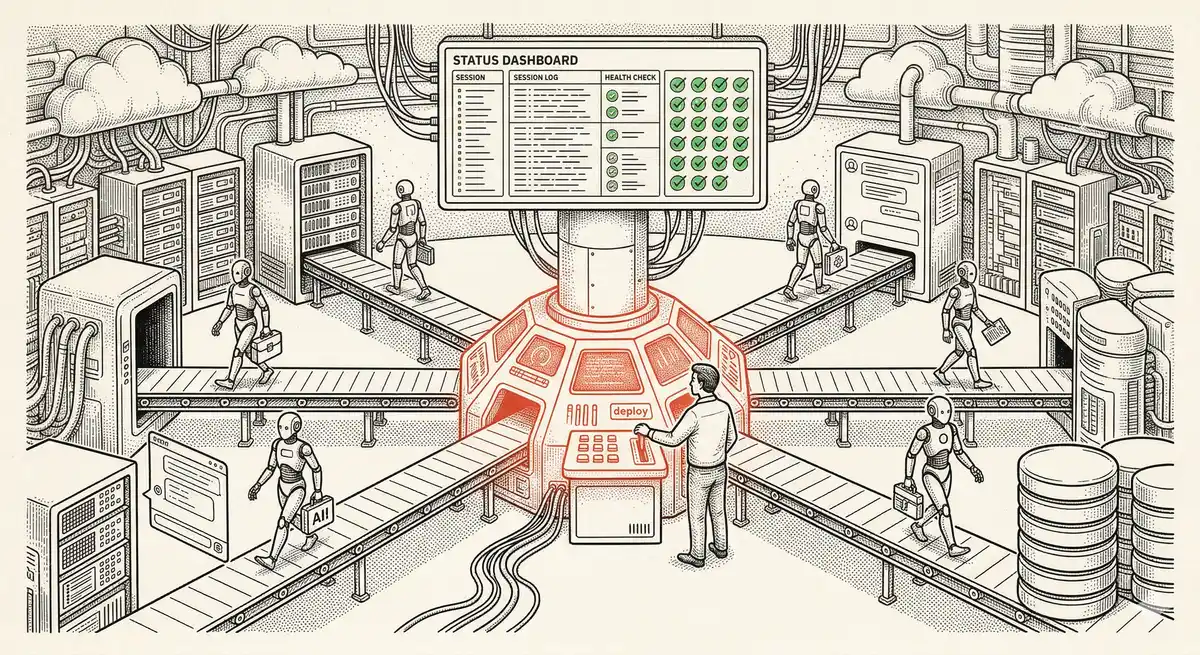
Claude Managed Agents: Anthropic's Platform for Production Agent Deployment
Anthropic launches Managed Agents: a cloud platform for deploying AI agents in production. Secure sandbox, checkpointing, multi-agent, autonomous sessions lasting hours. Notion, Rakuten, Asana and Sentry already use it.

Claude Code Dream & Auto Dream: Automatic Memory Consolidation
After 20 sessions, Auto Memory notes become a mess. Auto Dream solves this by automatically consolidating Claude Code's memory: deduplication, stale entry removal, relative-to-absolute date conversion.
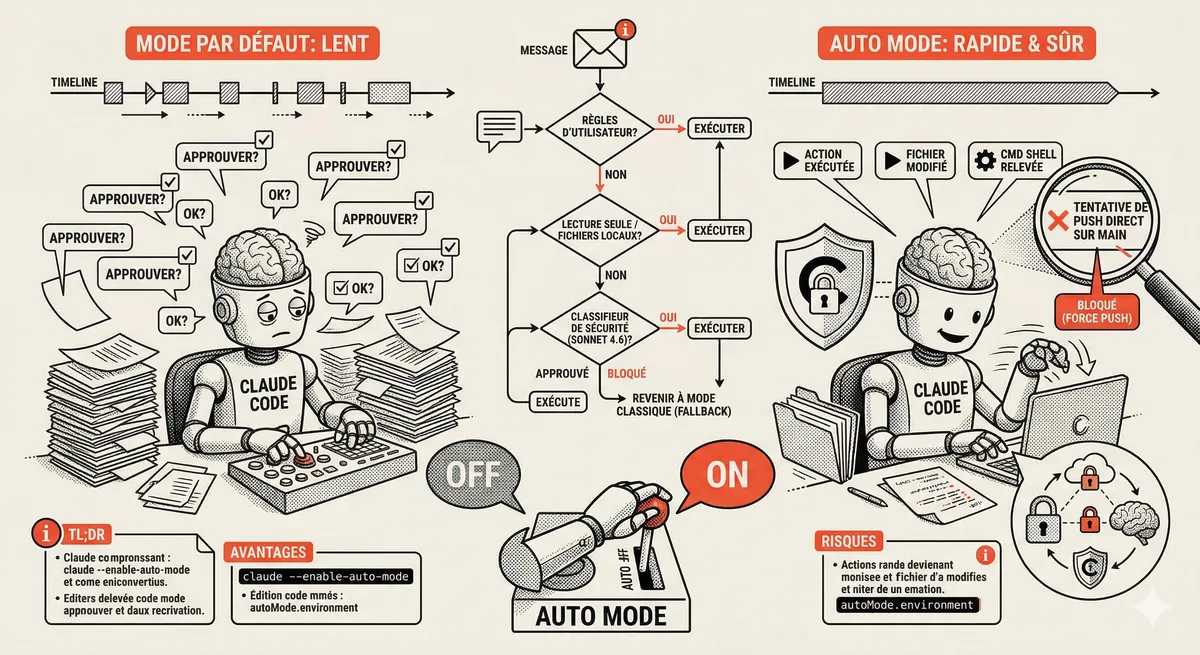
Claude Code Auto Mode: Autonomy Without the Risk
Auto Mode in Claude Code eliminates permission interruptions while keeping a safety net. A classifier analyzes every action before execution and blocks destructive operations. The sweet spot between approving everything and letting everything through.
Claude Code Training
Master Claude Code fundamentals in 1 day with our expert instructors. 60% hands-on practice on real-world cases.
Discover the training