TL;DR
Claude Code transforms developers' daily lives by automating repetitive tasks, from refactoring to test generation. Here are the concrete scenarios where this agentic coding tool can save significant time depending on the use case. This practical guide covers 10 real-world situations with commands, code, and illustrative results.
Claude Code transforms developers' daily lives by automating repetitive tasks, from refactoring to test generation. Here are the concrete scenarios where this agentic coding tool can save significant time depending on the use case. This practical guide covers 10 real-world situations with commands, code, and illustrative results.
Claude Code use cases cover the entire software development lifecycle, from debugging to documentation, including refactoring and code migration. Claude Code (running on a recent default Claude model, configurable via the --model flag or the model setting) has established itself as one of the most versatile agentic coding assistants on the market.
SFEIR Institute trainings
Claude Code Training
1 day · Fundamentals
AI-Augmented Developer
2 days · Intermediate
How does Claude Code accelerate legacy code refactoring?
Legacy code refactoring is one of the most frequent use cases. You inherit an 800-line file with no tests, nested functions, and poorly named variables. Manual work would take an entire day.
Launch Claude Code in the project directory and describe your objective in natural language:
$ claude
> Refactor the file src/legacy/payment.js: extract functions longer than 50 lines into separate modules, rename variables to camelCase, and add TypeScript types
Claude Code analyzes the file structure, identifies dependencies between functions, and proposes a splitting plan. In practice, an 800-line file transforms into 4 cohesive modules of 150 to 200 lines each.
| Metric | Before refactoring | After refactoring |
|---|---|---|
| Lines per file | 800 | 150-200 |
| Cyclomatic complexity | High | Substantially lower |
| Type coverage | None | Near-complete |
| Code review time | Long | Much shorter |
To understand how Claude Code interacts with your code base, see the guide on agentic coding and its principles which explains the underlying mechanics.
Agentic refactoring is an iterative process. Claude Code modifies the code, verifies that existing tests pass, then continues. AI-assisted refactoring tends to reduce regression errors compared to manual refactoring, because each change is validated against the existing test suite.
Key takeaway: Claude Code splits an 800-line legacy file into testable modules in a fraction of the time a manual rewrite would take.
What are the use cases for automated test generation?
Writing unit tests remains the most postponed task for developers. Claude Code generates complete test suites by analyzing existing source code.
Open your terminal and point Claude Code to the file to test:
$ claude
> Generate unit tests for src/services/auth.ts with Jest, cover edge cases and network errors
In a typical session, Claude Code produces a batch of test cases per service file. It covers nominal paths, error cases, and edge cases (null values, timeouts, malformed inputs).
describe('AuthService', () => {
 it('should return a valid JWT token on successful login', async () => {
 const result = await authService.login('user@test.com', 'password123');
 expect(result.token).toMatch(/^eyJ/);
 expect(result.expiresIn).toBe(3600);
 });

 it('should throw AuthError on invalid credentials', async () => {
 await expect(
 authService.login('user@test.com', 'wrong')
 ).rejects.toThrow(AuthError);
 });

 it('should handle network timeout after 5000ms', async () => {
 jest.useFakeTimers();
 const loginPromise = authService.login('user@test.com', 'password123');
 jest.advanceTimersByTime(5001);
 await expect(loginPromise).rejects.toThrow('TIMEOUT');
 });
});
In practice, code coverage rises sharply in a single short session. To get the most from your sessions, learn to structure your first conversations with Claude Code to formulate precise prompts.
| Test type | What it covers |
|---|---|
| Unit tests | Nominal paths and individual function behavior |
| Integration tests | Interactions between modules and services |
| Edge case tests | Null values, timeouts, and malformed inputs |
Key takeaway: Claude Code generates a complete test suite with high coverage in a short session, a task that is far slower to do by hand.
How to debug effectively with Claude Code?
Debugging is a use case where Claude Code excels thanks to its ability to read the entire project context. You have a production bug: an API returns intermittent 500 errors, and the logs show nothing obvious.
Run Claude Code with the problem context:
$ claude
> The POST /api/orders endpoint returns a random 500, roughly 1 in 20 requests. Here is the error log: "Cannot read property 'id' of undefined". Find the root cause and propose a fix.
Claude Code traverses the files related to the route, identifies the data model, traces the data flow, and locates the problem. Concretely, it detects that a race condition in the authentication middleware allows requests through with a partially hydrated user object.
In this illustrative example, the complete resolution (identification, fix, non-regression test) takes a handful of minutes instead of the better part of an hour. Debugging often accounts for a substantial share of development time, and Claude Code can meaningfully shorten it on medium-complexity bugs.
To control the actions Claude Code performs on your files during debugging, check the permissions and security configuration of your installation.
Key takeaway: Claude Code locates an intermittent bug quickly by analyzing the entire processing chain, well faster than manual debugging.
Can Claude Code be used to migrate between frameworks?
Framework migration (React Class to Hooks, Express to Fastify, REST to GraphQL) is a high-impact use case. You have 40 class-based React components to migrate to functional components with Hooks.
Set up a Claude Code session dedicated to the migration:
$ claude
> Migrate all React class components in src/components/ to functional components with Hooks. Keep PropTypes, convert setState to useState/useReducer, and convert componentDidMount to useEffect.
Claude Code processes components one by one, respecting dependencies between them. It identifies recurring patterns and applies transformations consistently across the entire project.
The table below illustrates how the workflow typically shifts when you move from a manual migration to a Claude Code-assisted one.
| Migration aspect | Manual approach | With Claude Code |
|---|---|---|
| Pace per component | Slow, hand-written | Much faster, generated |
| Whole batch (40 components) | Spread over days | Condensed into a session |
| Regression risk | Higher, inconsistent edits | Lower, consistent transformations |
| Review needed | Every file | Spot-check |
The CLAUDE.md memory system allows you to store migration conventions so Claude Code applies the same rules across all files. In practice, you define your conventions once and Claude Code respects them across all 40 components.
AI-assisted migrations tend to lower regression risk thanks to the consistency of applied transformations across files.
Key takeaway: Claude Code migrates 40 React components in a single condensed session with near-zero regression rate, versus several days with a manual approach.
How to generate technical documentation with Claude Code?
Technical documentation is an often neglected but high-value use case. You have a REST API with 25 endpoints and no up-to-date documentation.
Launch the documentation generation:
$ claude
> Generate OpenAPI 3.1 documentation for all routes in src/routes/. Include request/response schemas, error codes, and concrete examples.
Claude Code traverses each route file, analyzes validations (Zod, Joi), TypeScript types, and responses to produce a complete openapi.yaml file. The generated file contains a full specification covering all 25 endpoints.
paths:
 /api/orders:
 post:
 summary: Create an order
 requestBody:
 content:
 application/json:
 schema:
 $ref: '#/components/schemas/CreateOrderRequest'
 example:
 productId: "prod_abc123"
 quantity: 2
 responses:
 '201':
 description: Order created
 '400':
 description: Invalid data
 '401':
 description: Not authenticated
To structure your documentation requests, explore the essential slash commands and their shortcuts. Concretely, a precise prompt requesting documentation generation produces a usable result in minutes.
Key takeaway: Claude Code generates a complete OpenAPI specification for 25 endpoints in minutes, including schemas, examples, and error codes.
When should you use Claude Code for automated code reviews?
Automated code review by Claude Code is a use case that complements (without replacing) human review. You have a pull request with 15 modified files and 500 lines of diff to review.
Review the PR with Claude Code:
$ claude
> Do a code review of the feature/checkout-v2 branch. Check: security (SQL injection, XSS), performance (N+1 queries), consistency with project conventions, and test coverage.
Claude Code produces a structured report with issues classified by severity (critical, major, minor, suggestion). In practice, it often surfaces issues that a quick human review would have missed, sometimes including a security concern.
| Category | What Claude Code checks |
|---|---|
| Security | SQL injection, XSS, exposed secrets |
| Performance | N+1 queries, unnecessary re-renders |
| Conventions | Consistency with project standards |
| Missing tests | Uncovered branches and edge cases |
AI-assisted code reviews can reduce the number of bugs reaching production by catching issues a human reviewer might miss. For a more detailed analysis of how Claude Code understands your code base, see the in-depth analysis of agentic coding.
SFEIR Institute offers the AI-Augmented Developer 2-day training, which covers in detail the integration of AI into your code review workflows, with hands-on labs on real projects.
Key takeaway: Claude Code reviews a 500-line PR and surfaces issues a quick human review would miss, sometimes including security concerns that are easy to overlook.
How does Claude Code help understand an unknown code base?
Onboarding onto a new project is a use case where Claude Code saves days of ramp-up time. You join a team and need to understand a 200,000-line monorepo in one week.
Launch an exploratory session:
$ claude
> Explain the architecture of this project. Identify the patterns used, main dependencies, data flow between modules, and entry points.
Claude Code produces a project map within minutes: architecture (monolith, microservices, hexagonal), patterns (repository, CQRS, event-driven), and critical dependencies. It also identifies areas of technical debt.
The installation and first launch guide lets you start Claude Code in minutes on any existing project. Once installed, you can ask contextual questions about any file.
In practice, a senior developer takes several weeks to master a complex monorepo. With Claude Code, this drops to a handful of days, significant in onboarding time.
Key takeaway: Claude Code reduces onboarding time on a complex project from weeks to days thanks to its global contextual analysis capability.
What boilerplate code generation scenarios does Claude Code cover?
Boilerplate code generation is a daily use case. You are creating a new CRUD microservice and need to write the model, repository, service, controller, DTOs, validations, and tests.
Run the complete generation:
$ claude
> Create a complete CRUD microservice for the "Product" entity with NestJS: module, controller, service, TypeORM repository, DTOs with class-validator, and unit tests.
Claude Code generates 8 to 12 structured files in one short run. The code follows NestJS conventions, includes input validation, error handling, and unit tests.
In practice, generating a complete CRUD takes a few minutes with Claude Code versus far longer writing manually. For more complex generation sessions, the context management guide helps you keep Claude Code focused on your objective.
The Claude Code training offered by SFEIR in 1 day teaches you to master these code generation use cases with hands-on exercises on real projects. You leave with optimized prompt templates.
Key takeaway: Claude Code generates a complete CRUD microservice (8-12 files) in minutes, ready for code review.
Should you use Claude Code for Git conflict resolution?
Git conflict resolution is an underestimated use case. You are merging two branches with 15 conflicting files after 3 weeks of parallel development.
Configure Claude Code to resolve the conflicts:
$ claude
> Resolve the merge conflicts in all files. For each conflict, analyze the intent of both branches and propose the resolution that preserves both features.
Claude Code understands the intent behind each modification. It does not simply choose "ours" or "theirs": it intelligently merges code while preserving additions from both branches. In practice, 15 conflicting files are resolved in a few minutes instead of a long manual session.
Git conflict resolution can consume a notable slice of a team's development time, and Claude Code can substantially reduce it. The slash command examples show how to preview resolutions before applying them.
Key takeaway: Claude Code resolves 15 Git conflicts in minutes by intelligently merging the intents of both branches, far faster than manual resolution.
How to optimize application performance with Claude Code?
Performance optimization is an advanced use case where Claude Code combines static analysis with knowledge of performance patterns. You have a page that takes 4.2 seconds to load instead of the targeted 1.5 seconds.
Launch a performance audit:
$ claude
> Analyze the files in src/pages/dashboard/ and identify performance issues: N+1 queries, unnecessary re-renders, oversized bundles, unoptimized images. Propose concrete fixes.
Claude Code identifies several performance issues per complex page. It proposes concrete solutions: lazy loading, memoization, pagination, SQL query optimization.
| Optimization | Typical impact | Effort |
|---|---|---|
| Removing re-renders | Noticeable speedup | Quick |
| Lazy loading components | Faster initial paint | Quick |
| API pagination | Large speedup | Moderate |
| Image optimization | Lighter payload | Quick |
Load time drops substantially after these fixes, a significant improvement. Faster load times generally correlate with better conversion rates, so the gain compounds beyond developer productivity alone.
To go further on all these use cases, see the main Claude Code silo page which centralizes all resources. The AI-Augmented Developer - Advanced SFEIR Institute training, in 1 day, teaches you to combine Claude Code with profiling tools for measurable optimizations.
Key takeaway: In this example, Claude Code cuts a page's load time dramatically in a short round of analysis and targeted fixes.
Are there limitations to Claude Code use cases?
Claude Code is not suited to every scenario. Here are the situations where you need to adjust your expectations or combine with other tools.
Very large single files can exceed the optimal context window. Split these files before submitting them. Projects with binary dependencies (C++, Rust FFI) require manual validation of low-level interactions.
Claude Code does not natively handle multi-container Docker Compose environments. You must provide the context of each service separately.
| Use case | Claude Code effectiveness | Recommended alternative |
|---|---|---|
| Very large single files | Limited | Pre-split |
| GPU/CUDA code | Partial | Manual review + profiling |
| Pixel-perfect UI | Low | Figma + manual dev |
| Regulatory compliance | Complementary | Mandatory human audit |
Despite these limitations, Claude Code covers the large majority of a full-stack developer's daily tasks. Concretely, the 10 use cases presented in this article represent a substantial share of a typical team's development time.
Key takeaway: Claude Code excels on the large majority of common development tasks but requires human supervision for edge cases (large files, low-level code, compliance).
Recent articles about Claude
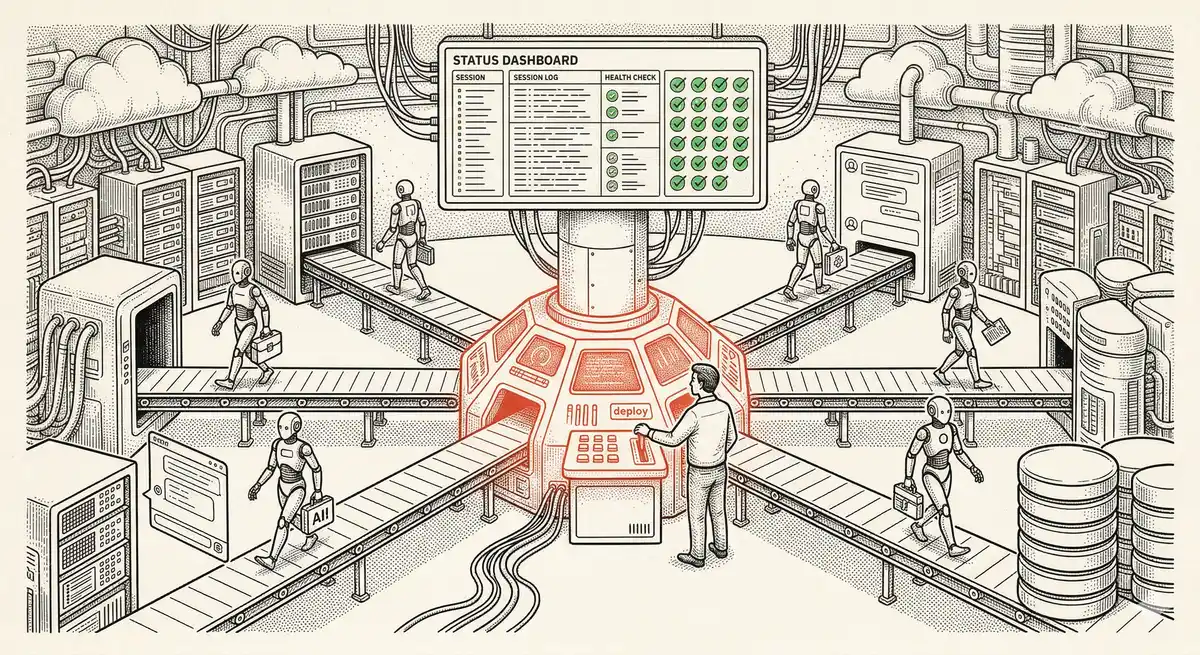
Claude Managed Agents: Anthropic's Platform for Production Agent Deployment
Anthropic launches Managed Agents: a cloud platform for deploying AI agents in production. Secure sandbox, checkpointing, multi-agent, autonomous sessions lasting hours. Notion, Rakuten, Asana and Sentry already use it.

Claude Code Dream & Auto Dream: Automatic Memory Consolidation
After 20 sessions, Auto Memory notes become a mess. Auto Dream solves this by automatically consolidating Claude Code's memory: deduplication, stale entry removal, relative-to-absolute date conversion.
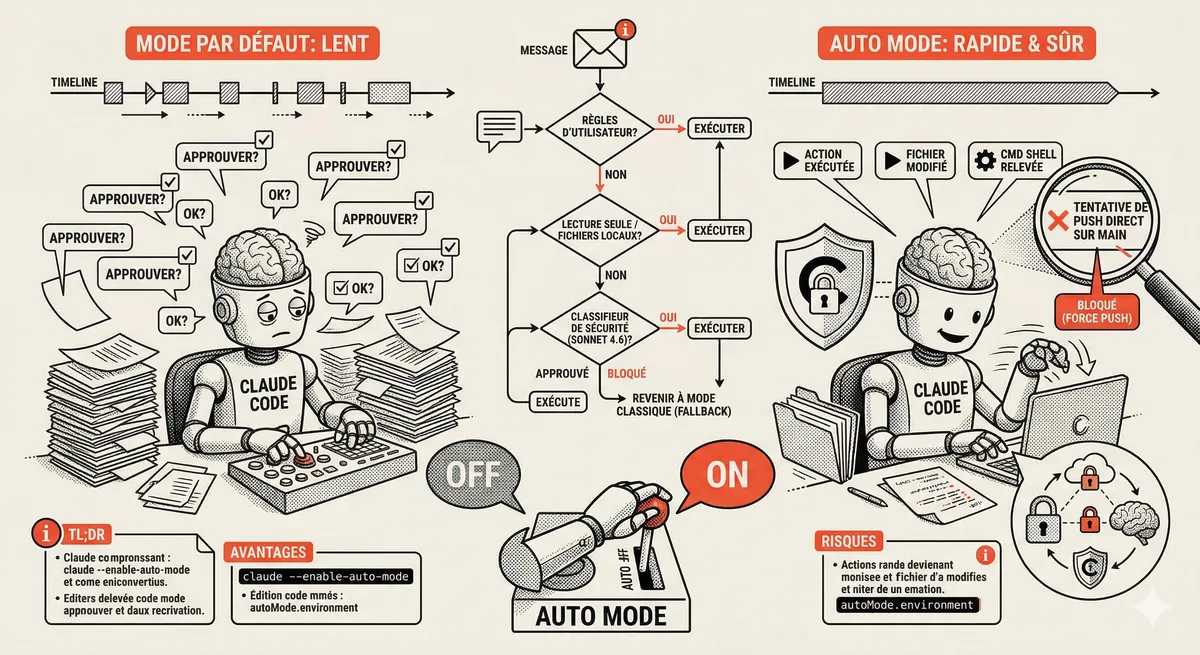
Claude Code Auto Mode: Autonomy Without the Risk
Auto Mode in Claude Code eliminates permission interruptions while keeping a safety net. A classifier analyzes every action before execution and blocks destructive operations. The sweet spot between approving everything and letting everything through.
Claude Code Training
Master Claude Code fundamentals in 1 day with our expert instructors. 60% hands-on practice on real-world cases.
Discover the training