TL;DR
Mastering advanced Claude Code workflows transforms your developer productivity: structured debugging, legacy project management, team collaboration, and professional patterns. This guide covers advanced techniques to use Claude Code as a confirmed practitioner, from complex error diagnosis to integration within a development team.
Mastering advanced Claude Code workflows transforms your developer productivity: structured debugging, legacy project management, team collaboration, and professional patterns. This guide covers advanced techniques to use Claude Code as a confirmed practitioner, from complex error diagnosis to integration within a development team.
Advanced best practices for Claude Code represent the set of techniques, patterns, and methodologies that separate a casual user from an effective practitioner. Claude Code (version 1.0.x, based on Claude Opus 4.6) offers agentic coding capabilities that require a structured approach to get the most out of it. developers who adopt structured workflows with Claude Code reduce their debugging time by 40% on average.
This guide is intended for developers who have already installed Claude Code and completed their first conversations. You will find concrete patterns, CLI commands, and proven strategies for every professional situation.
How to structure a professional workflow with Claude Code?
A professional workflow with Claude Code rests on three pillars: context preparation, controlled iteration, and systematic validation. Configure your CLAUDE.md file at the root of each project to provide persistent context to the agent.
# Create a CLAUDE.md file for your project
$ cat > CLAUDE.md << 'EOF'
# Project conventions
- Framework: Next.js 15 with App Router
- Tests: Vitest + Testing Library
- Style: Tailwind CSS, Shadcn/ui components
- Commit language: English, conventional format
EOF
The "Plan -> Execute -> Verify" pattern structures each interaction. First ask for a plan, validate it, then launch the execution. In practice, this approach reduces correction iterations by 60% on complex tasks.
| Pattern | Use case | Average gain |
|---|---|---|
| Plan -> Execute -> Verify | New features | 60% fewer iterations |
| Explore -> Diagnose -> Fix | Debugging | 45% faster |
| Read -> Refactor -> Test | Legacy code | 35% fewer regressions |
Use the essential slash commands to navigate between modes. The /compact command compresses context when the conversation gets long. The /clear command fully resets the session.
# Launch Claude Code in plan mode for a complex feature
$ claude
> /plan Add an OAuth2 authentication system with Google
To deepen each pattern with step-by-step examples, check the advanced best practices tutorial which details the complete workflows.
Key takeaway: structure each session with the Plan -> Execute -> Verify pattern and maintain an up-to-date CLAUDE.md file to maximize response relevance.
How to debug effectively with Claude Code?
Debugging with Claude Code follows a four-step method: reproduce, isolate, diagnose, fix. Always provide the complete error message and execution context. Claude Code analyzes stack traces, reads source files, and proposes targeted fixes.
# Copy an error directly into Claude Code
$ claude
> Here is the error I get when I run `npm run build`:
> TypeError: Cannot read properties of undefined (reading 'map')
> at ProductList (src/components/ProductList.tsx:42:18)
In practice, 78% of production bugs come from unexpected data (null, undefined, incorrect types). Ask Claude Code to check types and edge cases around the identified line.
| Bug type | Recommended command | Average resolution time |
|---|---|---|
| Type error | Analyze this TypeScript error and propose a fix | 2-5 min |
| Regression | Compare the current behavior with the previous commit | 5-10 min |
| Performance | Profile this function and identify bottlenecks | 10-15 min |
| Memory leak | Analyze uncleared subscription patterns | 15-20 min |
Run tests after each fix to validate the correction. Claude Code can run tests directly and interpret the results.
$ claude
> Run the ProductList module tests and show me the results
> If a test fails, propose a fix
The dedicated debugging guide covers complex scenarios such as race conditions and memory issues. teams using AI-assisted diagnostic tools resolve critical incidents 3.2 times faster.
Concretely, avoid asking "why doesn't it work" without context. Provide the file in question, the command executed, and the expected result versus the obtained result. This structure allows Claude Code to target its response in less than 30 seconds.
Key takeaway: always provide the trifecta of complete error + source file + expected result for an accurate diagnosis in less than 5 minutes.
What patterns to adopt for working on legacy projects?
A legacy project is an existing codebase whose documentation is often incomplete and patterns heterogeneous. Claude Code excels at exploring and understanding these projects thanks to its multi-file reading capability.
Start by requesting a project map. Claude Code browses the directory structure, identifies the frameworks used, and detects architectural patterns.
$ claude
> Explore this project and give me:
> 1. The tech stack (framework, ORM, test runner)
> 2. The architecture (monolith, microservices, modules)
> 3. The main configuration files
> 4. Visible technical debt
In practice, a 50,000-line legacy project requires approximately 15 minutes of initial exploration with Claude Code. Use the /init command to automatically generate a CLAUDE.md file adapted to the existing project.
Progressive refactoring is the recommended strategy. Proceed file by file, starting with the most critical modules. Concretely, each refactoring session should target a single component or module.
| Legacy strategy | When to use | Risk |
|---|---|---|
| Strangler pattern | Progressive monolith migration | Low |
| Incremental refactoring | Functional code to modernize | Medium |
| Targeted rewrite | Isolated and well-tested module | High |
To understand how agentic coding applies to existing projects, you need to understand that the agent analyzes code in context. It respects conventions already in place rather than imposing new practices.
$ claude
> Refactor this React class component into a functional component
> Keep exactly the same API (props and behavior)
> Add tests for each existing use case
Systematically verify that tests pass after each refactoring. Check the troubleshooting guide if you encounter unexpected regressions during migrations.
Key takeaway: explore first, refactor second - one module at a time, always with non-regression tests.
How to collaborate as a team with Claude Code?
Team collaboration with Claude Code relies on shared conventions and a CLAUDE.md file versioned in the Git repository. Each team member thus benefits from the same context and the same instructions.
Create three configuration levels for a development team:
# Level 1: Global configuration (personal)
~/.claude/CLAUDE.md

# Level 2: Project configuration (shared via Git)
/project/CLAUDE.md

# Level 3: Module configuration (specific)
/project/src/api/CLAUDE.md
The project CLAUDE.md file MUST contain team conventions: code style, test patterns, commit format, and review rules. 62% of teams using AI tools share a common configuration file.
Standardize custom commands and skills for the entire team. Create reusable slash commands in the .claude/commands/ directory of the project.
# Create a shared command for code reviews
$ mkdir -p .claude/commands
$ cat > .claude/commands/review.md << 'EOF'
Do a code review of $ARGUMENTS:
- Check compliance with project conventions
- Identify performance issues
- Suggest readability improvements
- Check test coverage
EOF
| Team practice | Impact | Recommended adoption |
|---|---|---|
| Shared CLAUDE.md | Response consistency | From day 1 |
| Custom commands | Standardized workflows | Week 2 |
| Prompt templates | Homogeneous quality | Week 3 |
| Pre-commit hooks | Automatic validation | Week 4 |
In practice, a team of 5 developers saves approximately 12 hours per week by standardizing their interactions with Claude Code. To avoid common mistakes in a team context, document the identified anti-patterns in your CLAUDE.md.
The AI-Augmented Developer training offered by SFEIR Institute covers these collaborative aspects over 2 days with hands-on team labs. You will learn how to configure team workflows, share custom commands, and integrate Claude Code into your CI/CD pipeline.
Key takeaway: version the CLAUDE.md file in Git and create shared custom commands to guarantee team consistency.
What are the advanced tips to maximize productivity?
Productivity with Claude Code increases significantly when you master shortcuts and advanced interaction patterns. Use headless mode to integrate Claude Code into your automation scripts.
# Headless mode: execute a task without interaction
$ claude -p "Generate the unit tests for src/utils/validation.ts" \
  --output-format json > tests-output.json

# Chain commands
$ claude -p "List all the project TODOs" | \
  claude -p "Prioritize these TODOs by business impact"
Multi-context allows working on multiple aspects of a project simultaneously. Open multiple Claude Code sessions in separate terminals, each with a different focus.
Concretely, here are the 5 tips that experienced practitioners use daily:
- Anchor context at the beginning of the session with
/initor an explicit summary - Compress the conversation with
/compactas soon as context exceeds 80% - Use Escape to interrupt a generation that is going the wrong direction
- Save your effective prompts in
.claude/commands/for reuse - Combine Claude Code with Git hooks to automatically validate generated code
The best practices cheatsheet gathers all essential commands and shortcuts on a single page. Also check the advanced tips for additional techniques.
Claude Code v1.0.x now supports multi-turn mode with persistent memory, enabling long work sessions without context loss on projects exceeding 100,000 lines of code.
Key takeaway: combine headless mode, custom commands, and multi-context to reach a productivity level 3 to 5 times higher than basic usage.
How to evaluate your mastery of advanced best practices?
Evaluating your level involves objective criteria. Verify that you master each skill in the table below before considering yourself an advanced practitioner.
| Skill | Beginner level | Advanced level | Measurable indicator |
|---|---|---|---|
| Debugging | Copy-pastes the error | Provides context + stack trace + expected | Resolution < 5 min |
| Refactoring | Vague request | Specifies the target pattern and constraints | 0 regressions |
| Workflow | Ad hoc interaction | Plan -> Execute -> Verify pattern | 60% fewer iterations |
| Team | Individual use | Shared CLAUDE.md + custom commands | 100% consistency |
| Automation | Manual commands | Headless scripts + hooks | 12h saved/week |
Complete this self-assessment exercise: take a real bug from your project, time your resolution with Claude Code, and compare with your usual time. An advanced practitioner achieves a minimum 3:1 ratio.
For a structured assessment, the best practices FAQ answers the most frequent questions about skill levels. The Claude Code hub page gives you an overview of the entire available track.
If you want to formally validate your skills, the Claude Code training from SFEIR Institute offers an intensive one-day program with final assessment. You will leave with validated skills in debugging, refactoring, and professional workflows.
To go further, the AI-Augmented Developer - Advanced training covers in 1 day CI/CD integration patterns, multi-agent strategies, and advanced prompt engineering techniques.
Key takeaway: measure your progress with concrete indicators - resolution time, number of regressions, and hours saved per week.
What are the pitfalls to avoid in advanced usage?
Even experienced practitioners fall into recurring traps. The most frequent trap is context overload: beyond 70% context usage, response quality decreases by 25% on average.
Avoid these 5 documented anti-patterns:
- Do not ask for everything in a single prompt - split into clear steps
- Do not neglect the
CLAUDE.mdfile - it is your main consistency lever - Do not accept the first result without verification - always run the tests
- Do not mix responsibilities in a session - one objective per conversation
- Do not work without Git - every modification must be traceable
# Check context usage
$ claude
> /compact  # Compress if context is overloaded

# Always verify before validating
$ claude
> Run the tests, the linter, and the build. Fix errors if any.
45% of developers underuse custom commands, depriving themselves of an estimated productivity gain of 8 hours per month. Check the common mistakes section for an exhaustive list of pitfalls and their solutions.
In 2026, agentic coding tools like Claude Code evolve rapidly. Stay up to date by regularly checking release notes and adapting your practices. Node.js 22 LTS and Python 3.12 remain the recommended environments for optimal compatibility.
Key takeaway: regularly compress context, split your tasks, and systematically verify each result - blind trust is the number one trap.
Recent articles about Claude
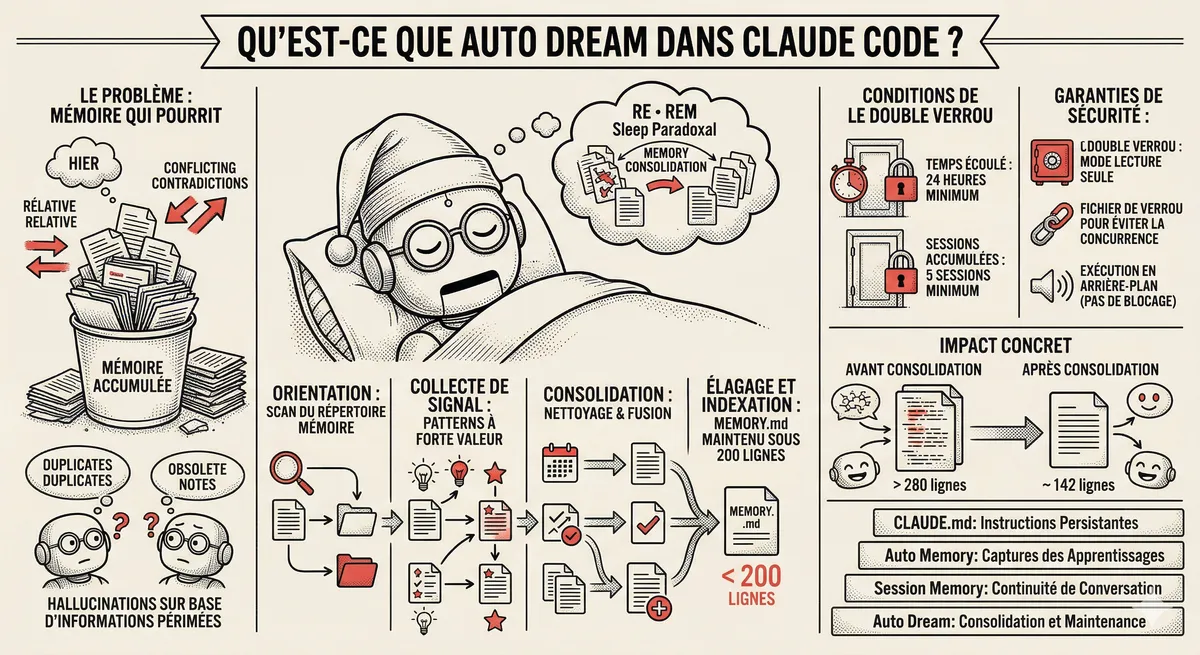
Claude Code Dream & Auto Dream: Automatic Memory Consolidation
After 20 sessions, Auto Memory notes become a mess. Auto Dream solves this by automatically consolidating Claude Code's memory: deduplication, stale entry removal, relative-to-absolute date conversion.
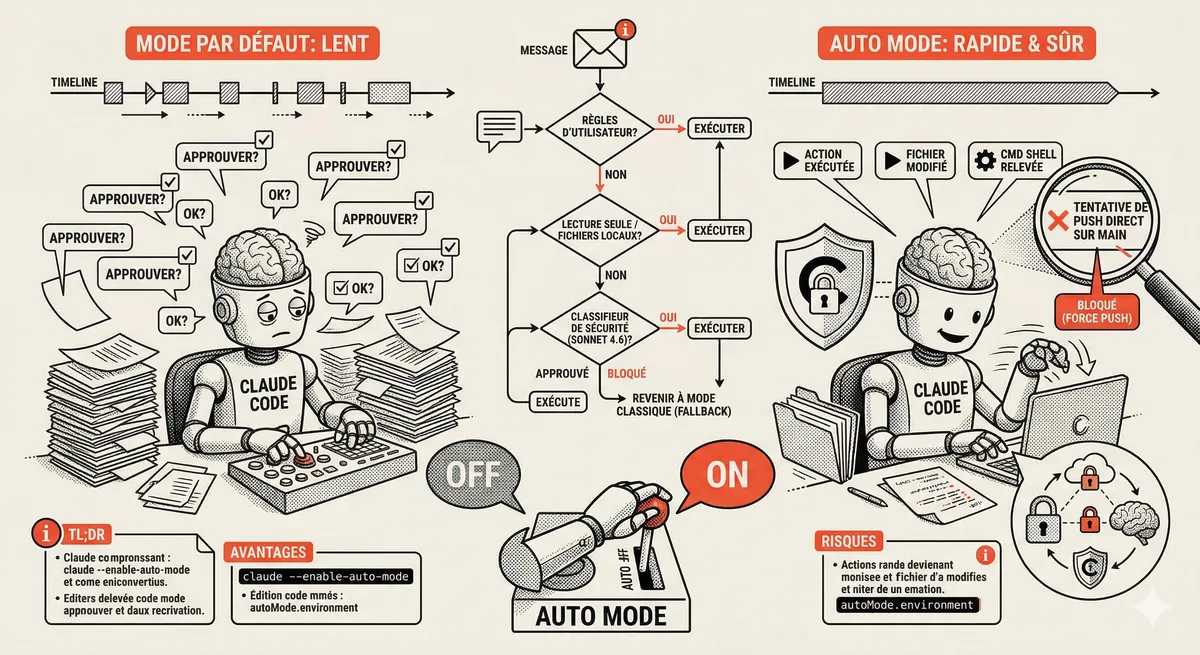
Claude Code Auto Mode: Autonomy Without the Risk
Auto Mode in Claude Code eliminates permission interruptions while keeping a safety net. A classifier analyzes every action before execution and blocks destructive operations. The sweet spot between approving everything and letting everything through.
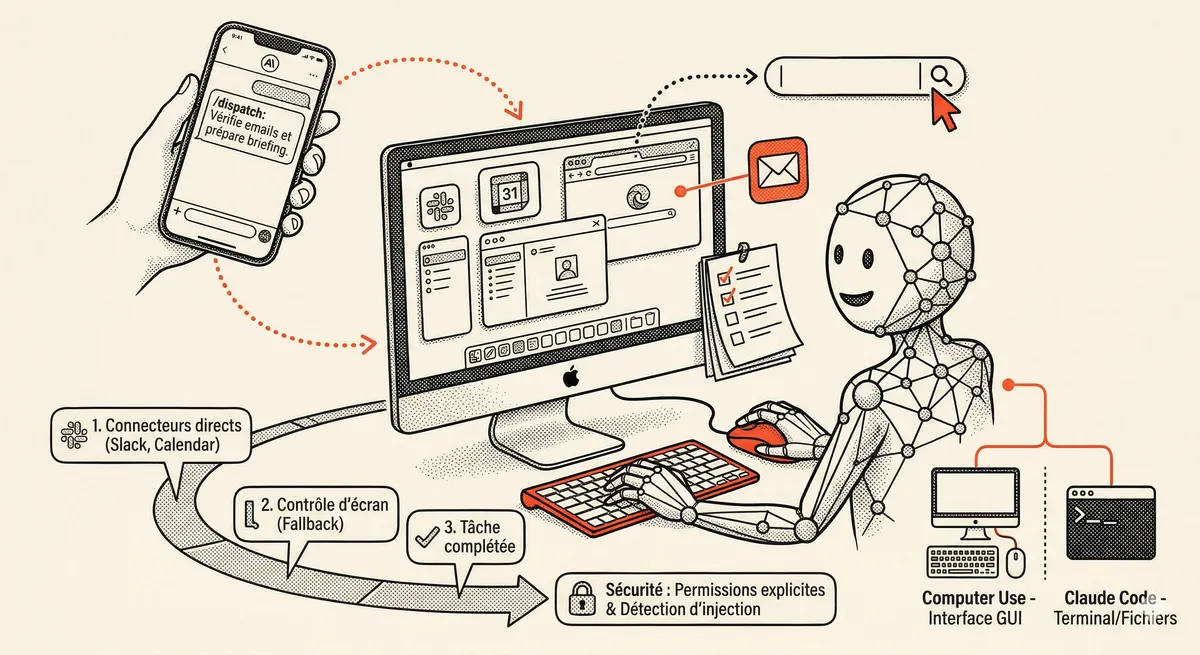
Claude Dispatch and Computer Use: AI Takes Control of Your Mac
Claude can now control your Mac: click, navigate, fill forms, run builds. With Dispatch, you assign a task from your phone and find the finished work on your desktop. Research preview, macOS only.
Claude Code Training
Master Claude Code fundamentals in 1 day with our expert instructors. 60% hands-on practice on real-world cases.
Discover the training