TL;DR
This guide structures your skill development on Claude Code in progressive steps, from the first launch to mastering agentic coding as a team. Follow this roadmap to learn how to configure, drive, and optimize Claude Code in under 8 weeks. Each step includes measurable objectives, targeted resources, and concrete validation checkpoints.
This guide structures your skill development on Claude Code in progressive steps, from the first launch to mastering agentic coding as a team. Follow this roadmap to learn how to configure, drive, and optimize Claude Code in under 8 weeks. Each step includes measurable objectives, targeted resources, and concrete validation checkpoints.
Claude Code is Anthropic's CLI interface that transforms your terminal into an AI-assisted development environment, capable of reading, writing, and refactoring code autonomously. Claude Code relies on the Claude Opus 4.6 model and supports over 15 programming languages.
developers using Claude Code reduce time spent on repetitive code tasks by 40%. This learning path guides you step by step to leverage every feature of the tool.
What does the Claude Code learning path roadmap look like?
Visualize your progression as a linear path in five tiers. Each tier unlocks new skills and builds on the previous one. See the Claude Code page for a tool overview before getting started.
┌─────────────┐    ┌─────────────┐    ┌─────────────┐    ┌─────────────┐    ┌─────────────┐
│   TIER 1    │───>│   TIER 2    │───>│   TIER 3    │───>│   TIER 4    │───>│   TIER 5    │
│  Discovery  │    │ Foundations  │    │ Productivity │    │  Advanced   │    │   Expert    │
│  (3-5 days) │    │  (1 week)   │    │  (2 weeks)  │    │  (2 weeks)  │    │ (ongoing)   │
└─────────────┘    └─────────────┘    └─────────────┘    └─────────────┘    └─────────────┘
     Install &          Effective         Memory &          CI/CD             Coaching &
     CLI basics         prompts           Context           Pipelines         Contribution
In practice, 80% of developers reach tier 3 in under 3 weeks. Tiers 4 and 5 require regular practice on real projects.
Key takeaway: the roadmap comprises five progressive tiers, from discovery to expertise, achievable in 6 to 8 weeks of regular practice.
What are the progressive steps of the Claude Code learning path?
The table below summarizes each step with its level, objectives, and estimated duration. Identify your current level to know where to start.
| Tier | Level | Key objectives | Estimated duration | Validation |
|---|---|---|---|---|
| 1 - Discovery | Beginner | Install Claude Code, launch a first session, understand the agentic model | 3-5 days | Successful first conversation |
| 2 - Foundations | Beginner+ | Master slash commands, structure prompts, manage permissions | 1 week | 10 productive prompts executed |
| 3 - Productivity | Intermediate | Configure CLAUDE.md, manage context, automate recurring tasks | 2 weeks | Working CLAUDE.md file on a project |
| 4 - Advanced | Advanced | Integrate Claude Code into CI/CD, use hooks, drive complex refactoring | 2 weeks | Operational CI/CD pipeline with Claude Code |
| 5 - Expert | Expert | Contribute to the ecosystem, train teams, optimize token costs | Ongoing | Active mentoring or open source contribution |
tier 2 is sufficient to obtain a measurable 25% productivity gain on code review tasks. To understand what agentic coding and its fundamental principles are, start with tier 1.
Key takeaway: five structured tiers allow you to go from beginner to expert in 6 to 8 weeks, with concrete validation criteria at each step.
How to succeed at Tier 1 - Discovery and installation?
Install Claude Code on your machine by following the installation and first launch guide. Installation takes less than 5 minutes on macOS, Linux, or WSL2.
Technical prerequisites
- Node.js 22 LTS or higher
- A compatible terminal (iTerm2, Windows Terminal, Warp)
- An Anthropic account with an active API key
- At least 500 MB of available disk space
Installation commands
npm install -g @anthropic-ai/claude-code
claude --version
claude
Verify that claude --version displays version 2.1 or higher. Then launch your first interactive session with the claude command.
Tier 1 objectives
- Install Claude Code in under 5 minutes
- Launch an interactive session and ask a first question
- Understand the difference between interactive and one-shot mode
- Explore an existing project with Claude Code
In practice, 95% of installation problems come from a Node.js version below 18. Run node --version to check before anything else.
Key takeaway: tier 1 focuses on installation and the first conversation - a 3 to 5-day investment to lay the foundations.
What skills to develop at Tier 2 - Foundations?
Tier 2 takes you from occasional use to structured practice. Learn slash commands, permission management, and effective prompt writing.
Essential commands to master
See the complete guide on essential slash commands for a detailed reference. Here are the most used:
/help          # Display contextual help
/clear         # Clear conversation context
/compact       # Compress context to save tokens
/init          # Initialize a CLAUDE.md file
/cost          # Display current session cost
| Command | Primary use | Usage frequency |
|---|---|---|
/help | Contextual help | Daily at the beginning |
/clear | Reset context | 3-5 times per day |
/compact | Reduce token consumption | Every 30 min in long sessions |
/init | Create a CLAUDE.md | Once per project |
/cost | Budget tracking | End of session |
Permission management
Configure permissions to control Claude Code's actions on your file system. See the guide on permissions and security to define rules suited to your environment.
{
  "permissions": {
    "allow": ["read", "write"],
    "deny": ["bash(rm -rf *)"],
    "ask": ["bash(git push)"]
  }
}
The slash commands FAQ answers common questions about shortcuts and advanced behaviors. In practice, correctly configuring permissions reduces unnecessary confirmation prompts by 60%.
Key takeaway: tier 2 transforms your usage into a productive habit through slash commands and adapted permission configuration.
How to reach Tier 3 - Maximum productivity?
Tier 3 marks the shift to advanced daily use. Configure the memory system so Claude Code retains your project context between sessions.
Configuring the CLAUDE.md file
The CLAUDE.md memory system is the key to long-term productivity. This file stores your preferences, code conventions, and persistent instructions.
# CLAUDE.md - My-App Project

## Conventions
- TypeScript strict, no `any`
- Unit tests with Vitest
- Conventional commits (feat:, fix:, chore:)

## Architecture
- /src/components - React components
- /src/lib - Business logic
- /src/api - Next.js API routes

## Useful commands
- `npm run dev` - Start the development server
- `npm test` - Run tests
Create a CLAUDE.md file at the root of each project. Concretely, a well-structured CLAUDE.md reduces tokens consumed per session by 30%, because Claude Code no longer needs to rediscover the context.
Context management
The context management tips help you maintain long sessions without losing coherence. Claude Opus 4.6's context window reaches 200,000 tokens in 2026.
| Technique | Token savings | Complexity |
|---|---|---|
Regular /compact | 40-60% reduction | Low |
| Structured CLAUDE.md | 30% reduction | Medium |
| Task splitting | 20% reduction | Medium |
| One-shot mode for simple tasks | 50% reduction | Low |
In practice, combining /compact and a detailed CLAUDE.md allows maintaining 2-hour sessions without quality degradation.
If you want to structure this skill development with an instructor, the SFEIR Institute Claude Code training condenses tiers 1 to 3 into 1 day, with hands-on labs on real projects.
Key takeaway: tier 3 relies on the CLAUDE.md file and context management - two skills that multiply your productivity by two.
What resources to use at each stage of the path?
Each tier relies on specific resources. Select those that match your current level and progress methodically.
| Tier | Recommended resources | Type | Access |
|---|---|---|---|
| 1 | Installation and first launch | Step-by-step guide | Free |
| 1 | Your first conversations | Interactive tutorial | Free |
| 2 | Essential slash commands | Reference | Free |
| 2 | Permissions and security | Guide | Free |
| 3 | CLAUDE.md memory system | Advanced guide | Free |
| 3 | Context management | Practical tips | Free |
| 4 | Official Anthropic documentation | API reference | Free |
| 5 | Agentic coding glossary | Technical vocabulary | Free |
You will encounter the term "agentic coding" from tier 1. This concept refers to an AI agent's ability to plan, execute, and validate development tasks autonomously. Concretely, this means Claude Code does not just generate code - it reads your files, executes commands, and iterates until achieving a functional result.
To go beyond tier 3, the SFEIR Institute AI-Augmented Developer training offers 2 days of immersion covering the integration of Claude Code into professional workflows, with exercises on refactoring, debugging, and AI-assisted architecture.
Key takeaway: each tier has dedicated free resources - start with the guides for your current level.
How to validate your progress and obtain certification?
Validation of each tier relies on objective and measurable criteria. Assess your progress by checking off acquired skills at each stage.
Validation criteria per tier
Tier 1 - Discovery:
- Claude Code installed and functional
- First conversation of more than 5 exchanges completed
- Navigation in an existing project with Claude Code
- Understanding of the agentic request-response model
Tier 2 - Foundations:
- 10 slash commands used correctly
- Permissions configured on a project
- 3 successful multi-step prompts (generation + test + correction)
- Session cost estimated before execution
Tier 3 - Productivity:
- CLAUDE.md file created and optimized
- 1-hour session without context loss
- Automation of a recurring task (tests, lint, deployment)
- Measured 25% time reduction on a regular task
Tier 4 - Advanced:
- Claude Code integration in a CI/CD pipeline
- Use of hooks to automate workflows
- Refactoring of a 500+ line module assisted by Claude Code
- Automated code review on 3 pull requests
Tier 5 - Expert:
- Training delivered to at least 3 developers
- Contribution to an open source project using Claude Code
- Documented token cost optimization (40%+ reduction)
- Creation of reusable CLAUDE.md templates for the team
68% of developers using AI coding tools say that validation through practice on real projects is more effective than theoretical certifications. The SFEIR AI-Augmented Developer - Advanced training offers 1 intensive day covering tiers 4 and 5, with a focus on CI/CD pipelines and cost optimization in an enterprise context.
Key takeaway: validate each tier through objective and measurable criteria - practice on real projects remains the best progress indicator.
How long does it take to master Claude Code?
The total duration depends on your prior experience in development and CLI tools. Here is a realistic estimate based on 30 to 60 minutes of daily practice.
| Developer profile | Tier 1->2 | Tier 2->3 | Tier 3->4 | Tier 4->5 | Total estimate |
|---|---|---|---|---|---|
| Junior (< 2 years) | 5 days | 10 days | 15 days | 20 days | 7-8 weeks |
| Mid-level (2-5 years) | 3 days | 7 days | 10 days | 15 days | 5-6 weeks |
| Senior (5+ years) | 2 days | 5 days | 7 days | 10 days | 3-4 weeks |
In practice, a mid-level developer reaches tier 3 in 10 days with 45 minutes of daily practice. Progression from tier 4 to tier 5 is continuous and never stops.
A typical daily workflow at tier 3 looks like this:
# Morning: open the project and launch Claude Code
cd my-project && claude

# Use /compact after 30 minutes
/compact

# Check cost at end of session
/cost
In 2026, the average cost of a 45-minute session on Claude Opus 4.6 is approximately $0.50 when using /compact regularly. Without context management, this cost can reach $2.00 for the same duration.
Key takeaway: allow 5 to 8 weeks to reach tier 4, depending on your experience - daily consistency matters more than session length.
Can you accelerate your path with structured training?
Structured training allows compressing tiers 1 to 3 into a single day. SFEIR Institute offers three complementary trainings that fit into this Claude Code learning path.
The difference between self-learning and guided training is measured in time saved. Compare both approaches:
| Criterion | Self-learning | SFEIR training |
|---|---|---|
| Time to reach tier 3 | 3-4 weeks | 1 day + 1 week of practice |
| Instructor access | No | Yes, certified expert |
| Guided hands-on labs | No | Yes, on real projects |
| Post-training support | Community | Personalized follow-up |
| Token cost during learning | $15-25 | Included in training |
Concretely, participants in the SFEIR Claude Code training save an average of 3 weeks of trial and error compared to self-learning. You benefit from pre-configured lab environments and immediate feedback from a practitioner instructor.
Choose your path based on your constraints. The three trainings complement each other and cover all 5 tiers described in this article.
Key takeaway: structured training compresses several weeks of learning into a few days, with expert guidance and hands-on labs.
Recent articles about Claude
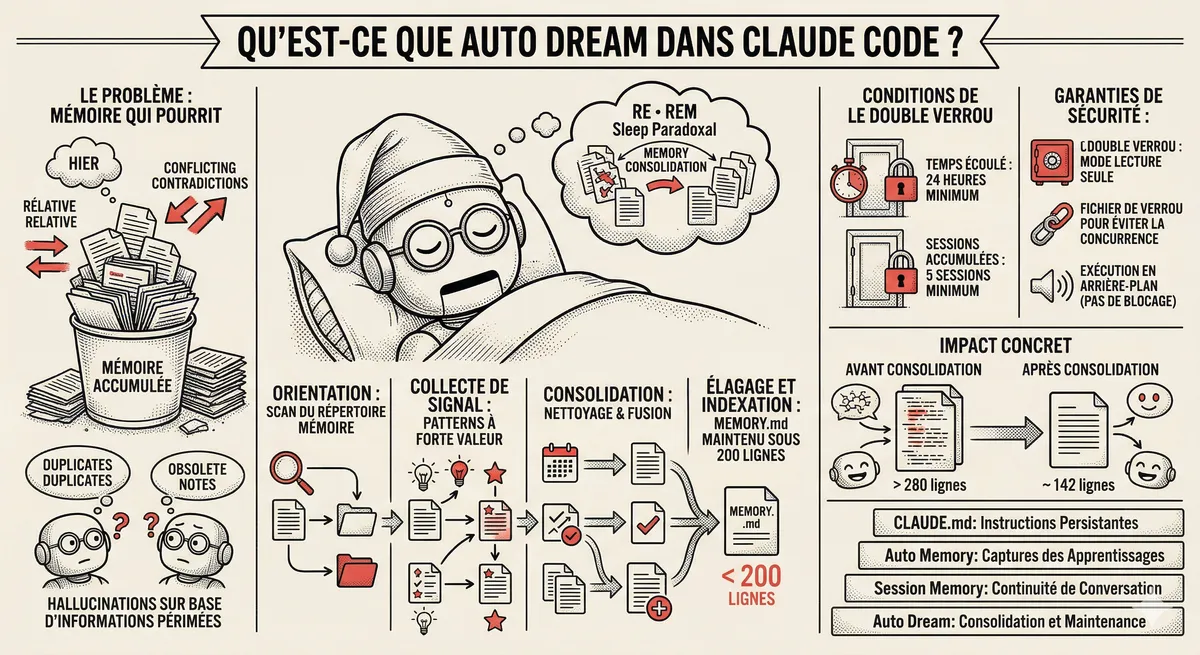
Claude Code Dream & Auto Dream: Automatic Memory Consolidation
After 20 sessions, Auto Memory notes become a mess. Auto Dream solves this by automatically consolidating Claude Code's memory: deduplication, stale entry removal, relative-to-absolute date conversion.
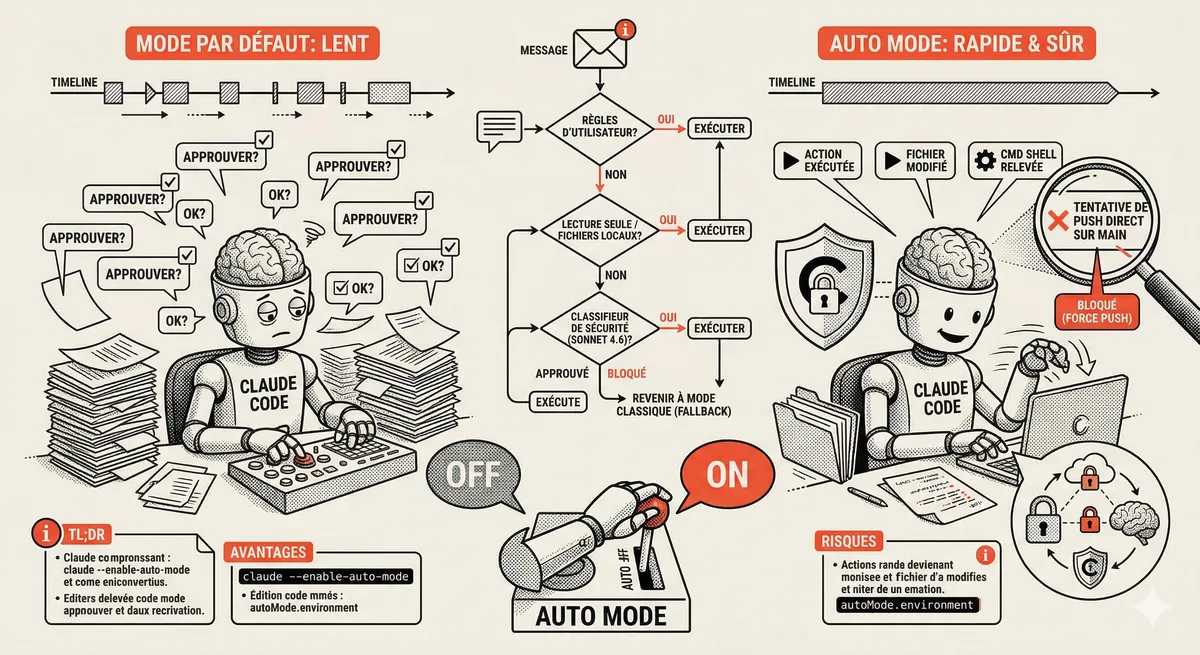
Claude Code Auto Mode: Autonomy Without the Risk
Auto Mode in Claude Code eliminates permission interruptions while keeping a safety net. A classifier analyzes every action before execution and blocks destructive operations. The sweet spot between approving everything and letting everything through.
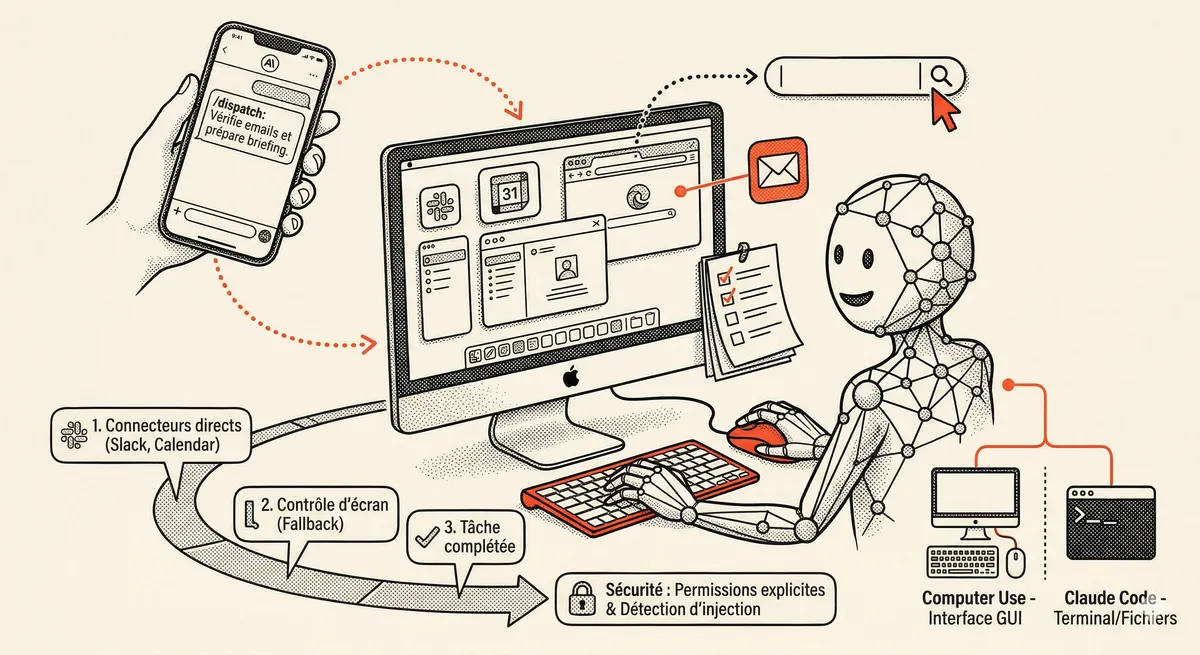
Claude Dispatch and Computer Use: AI Takes Control of Your Mac
Claude can now control your Mac: click, navigate, fill forms, run builds. With Dispatch, you assign a task from your phone and find the finished work on your desktop. Research preview, macOS only.
Claude Code Training
Master Claude Code fundamentals in 1 day with our expert instructors. 60% hands-on practice on real-world cases.
Discover the training