TL;DR
Claude Code's slash commands form a set of essential shortcuts for driving your AI assistant directly from the terminal. This guide offers 12 concrete, copyable examples - from `/help` to `/doctor` - ranked by difficulty level, to master each slash command and optimize your daily workflow.
Claude Code's slash commands form a set of essential shortcuts for driving your AI assistant directly from the terminal. This guide offers 12 concrete, copyable examples - from /help to /doctor - ranked by difficulty level, to master each slash command and optimize your daily workflow.
The essential slash commands in Claude Code are the primary mechanism for quick interaction between the developer and the AI agent in the command line. Claude Code (version 1.0.x, compatible with Node.js 22) offers more than 13 native slash commands covering configuration, context management, cost tracking, and diagnostics.
these commands reduce time spent navigating menus by 40% compared to a traditional graphical interface.
How to use /help to discover all available commands?
Open your terminal and launch Claude Code. The /help command displays the complete list of slash commands with a short description of each. You do not need any additional arguments.
$ claude
> /help
The expected result shows a summary table of all commands, their syntax, and their description. In practice, /help is the first command to run when you start with Claude Code.
If you are looking for help on a specific command, combine /help with the command name:
> /help compact
This variant filters the help to show only the details for /compact. For a complete onboarding, check the installation and first launch tutorial which guides you step by step.
| Command | Description | Argument Required |
|---|---|---|
/help | Displays all commands | No |
/help [command] | Targeted help on a command | Yes |
/help --verbose | Extended details | No |
Key takeaway: /help is your entry point - run it systematically during your first session.
How to initialize a project with /init?
The /init command creates a CLAUDE.md file at the root of your project. This file serves as persistent memory: it contains the conventions, critical paths, and instructions that Claude Code reads at each session.
$ cd my-project
$ claude
> /init
Claude Code analyzes your directory structure, detects configuration files (package.json, tsconfig.json, .eslintrc), and generates a pre-filled CLAUDE.md. a project initialized with /init gets 25% more relevant responses from the first interaction.
Check the generated content and customize it according to your team conventions:
$ cat CLAUDE.md
To dive deeper into customizing this file, check the CLAUDE.md memory system tutorial which details each configurable section.
| Generated Element | Typical Content | Editable |
|---|---|---|
| Tech stack | Node.js, TypeScript, etc. | Yes |
| Code conventions | Linter, formatting | Yes |
| Build commands | npm run build, npm test | Yes |
Key takeaway: run /init once per project, then keep the CLAUDE.md up to date manually.
How to use /clear to reset a conversation?
The /clear command erases the current conversation history without leaving Claude Code. You keep your active session, but the previous context is deleted. This is useful when you change topics or when the context window approaches its limit.
> /clear
In practice, Claude Code frees conversation memory immediately. The Claude Opus 4.6 context window reaches 200,000 tokens. A long conversation exceeding 150,000 tokens slows responses by 15 to 30%.
Use /clear before starting a different task in the same project. To understand the complete slash commands reference, browse the essential slash commands guide.
| Situation | Recommended Action |
|---|---|
| Topic change | /clear |
| Conversation > 100,000 tokens | /compact first, /clear if insufficient |
| Starting a new feature | /clear |
Key takeaway: /clear deletes all context - prefer /compact if you want to keep a summary.
How to optimize context with /compact?
The /compact command compresses the current conversation into a structured summary, then replaces it. You keep key information while reducing context size by 50 to 70%. This is the most strategic command for long sessions.
> /compact
You can also specify a focus to guide the compression:
> /compact focus=refactoring
This variant asks Claude Code to prioritize refactoring-related elements in the summary. Specifically, a 120,000-token context drops to approximately 40,000 tokens after compaction.
For advanced context management strategies, check the context management examples which illustrate real-world cases.
| Metric | Before /compact | After /compact |
|---|---|---|
| Tokens used | 120,000 | 40,000 |
| Response time | 8 s | 3 s |
| Key information | 100% | 90% |
Key takeaway: launch /compact when your session exceeds 80,000 tokens - you will gain speed without losing the thread.
How to track your spending with /cost?
The /cost command displays the cumulative cost of your current session. In 2026, the Claude Opus 4.6 rate is $15 per million input tokens and $75 per million output tokens. Check your spending regularly to avoid surprises.
> /cost
The result shows the number of tokens consumed (input and output) and the estimated cost in dollars. In practice, a 2-hour intensive development session costs between $0.50 and $3 depending on task complexity.
You can check the slash commands tips to learn how to reduce your costs by optimizing your prompts.
| Model | Input Cost (1M tokens) | Output Cost (1M tokens) |
|---|---|---|
| Claude Opus 4.6 | $15 | $75 |
| Claude Sonnet 4.6 | $3 | $15 |
| Claude Haiku 4.5 | $0.80 | $4 |
Key takeaway: run /cost after each heavy task to keep control of your API budget.
How to configure Claude Code with /config and /model?
The /config command opens the Claude Code configuration panel. You adjust permissions, theme, notifications, and output preferences. The /model command lets you change models mid-session.
> /config
To switch to a faster and cheaper model:
> /model sonnet
To switch back to the most capable model:
> /model opus
Specifically, switching from Opus to Sonnet divides the cost by 5 while maintaining 85% of quality on standard code tasks. Sonnet 4.6 correctly handles 92% of refactoring tasks under 500 lines.
The quick start guide details the configuration options available from installation.
Key takeaway: switch to Sonnet for simple tasks and reserve Opus for complex architectural problems.
How to manage authentication with /login and /logout?
The /login and /logout commands manage your connection to the Anthropic API. Use /login to authenticate with your API key or via OAuth.
> /login
Claude Code offers two authentication methods:
? Authentication method:
  > API Key (ANTHROPIC_API_KEY)
  > OAuth (browser)
To cleanly disconnect at the end of a shared session:
> /logout
This command revokes the local session token. It does not delete your global API key. If you are working on a shared workstation, always run /logout before leaving.
For hands-on training on all these commands, SFEIR Institute offers the Claude Code one-day training. You will practice each slash command in guided labs, with progressive exercises on a real project.
The slash commands FAQ answers frequently asked questions about authentication and connection errors.
Key takeaway: run /logout systematically on shared or CI/CD environments.
How to use /memory to drive persistent memory?
The /memory command opens and directly edits your project's CLAUDE.md file from the Claude Code session. You add instructions without leaving the terminal.
> /memory
Claude Code opens the CLAUDE.md in interactive editing mode. You can add rules such as:
# Project conventions
- Use ESM imports (no require)
- Tests with Vitest, not Jest
- Commits in English, conventional format
To verify that your rules are properly loaded, launch a related question:
> What test framework should I use?
# Claude responds "Vitest" if memory is correct
You can also use /memory to record architectural decisions. The CLAUDE.md memory system tutorial explains the memory file hierarchy (project, user, organization).
Key takeaway: populate /memory after each team decision so that Claude Code stays aligned with your conventions.
How to correct an error with /rewind?
The /rewind command undoes Claude Code's last action and returns to the previous conversation state. It is a "Ctrl+Z" for your interactions with the AI agent.
> /rewind
In practice, /rewind is essential when Claude Code modifies a file incorrectly. The command restores the file content AND the conversation context to the previous state.
You can chain multiple /rewind calls to go back several steps:
> /rewind
> /rewind
> /rewind
# Back 3 steps
Check the common slash command errors section to learn about cases where /rewind is not enough and a git checkout is still necessary.
| Situation | Command | Effect |
|---|---|---|
| Wrong file edit | /rewind | Undoes the edit + context |
| Incorrect code generated | /rewind then rephrase | New attempt |
| Multiple consecutive errors | /rewind x N | Return N steps |
Key takeaway: /rewind undoes the action AND the context - it is more powerful than a simple file undo.
How to diagnose a problem with /doctor?
The /doctor command runs a series of checks on your Claude Code installation. It tests API connectivity, Node.js version, project configuration, and file system permissions.
> /doctor
The result looks like this:
Node.js v22.0.0 detected
Anthropic API connection OK (latency: 120 ms)
CLAUDE.md file found
Write permissions OK
Git hooks not configured
Each check returns a status (pass or fail) with actionable details. In practice, /doctor detects 80% of configuration problems in under 5 seconds.
If you encounter installation issues, start with the installation tutorial then launch /doctor to validate each step.
Key takeaway: run /doctor whenever unexpected behavior occurs - it is your first diagnostic reflex.
How to combine /context with other commands for advanced workflows?
The /context command displays the files and context currently loaded in the session. For intermediate and advanced developers, combining multiple slash commands creates powerful workflows.
> /context
Here is a complete session-start workflow:
$ claude
> /model opus
> /init          # First time only
> /memory        # Check conventions
> /context       # See loaded files
> /cost          # Spending starting point
For a mid-session workflow when context saturates:
> /cost          # Check consumption
> /compact       # Compress the context
> /context       # Confirm preserved files
Specifically, this 3-command workflow takes under 10 seconds and can reduce your token consumption by 60%. trained developers use on average 8 different slash commands per work session.
To go further, the AI-Augmented Developer 2-day training covers advanced workflows, Git integration, and cost optimization strategies. If you already master the basics, the AI-Augmented Developer - Advanced one-day training dives deeper into automation techniques and CI/CD pipelines.
Check the Git integration examples to see how slash commands integrate with Git operations.
Key takeaway: combine /context, /compact, and /cost in a 3-command workflow to keep control of your long sessions.
What are the lesser-known shortcuts and variants of slash commands?
Some slash commands accept optional arguments that modify their behavior. Here are the most useful variants you will encounter in practice:
| Command | Variant | Effect |
|---|---|---|
/compact | /compact focus=tests | Prioritizes test context |
/model | /model haiku | Ultra-fast model (response < 500 ms) |
/help | /help model | Targeted help for /model |
/config | /config set theme dark | Direct configuration |
Claude Haiku 4.5 generates a response in under 500 ms on average, versus 2 to 4 seconds for Opus 4.6. For simple code generation tasks (boilerplate, unit tests), Haiku costs 95% less than Opus.
Check the slash commands tips and the complete FAQ to discover other variants.
To dive deeper into your first interactions with Claude Code, the tutorial on your first conversations shows you how to structure your prompts for precise results.
Key takeaway: argument variants turn simple commands into precision tools - explore them one by one.
How to solve common errors related to slash commands?
You will sometimes encounter errors when using slash commands. Here are the most common cases and their immediate resolution.
"Command not found" error:
> /comapct
# Error: Unknown command "/comapct". Did you mean "/compact"?
Claude Code v1.0.x includes an automatic corrector that suggests the closest command. Check the spelling and try again.
Expired session error:
> /cost
# Error: Session expired. Run /login to re-authenticate.
> /login
In practice, sessions expire after 24 hours of inactivity. The common errors guide documents 15 frequent errors with their solution.
| Error | Cause | Solution |
|---|---|---|
Unknown command | Typo | Fix the spelling |
Session expired | Inactivity > 24 h | /login |
Context too large | > 190,000 tokens | /compact or /clear |
Model unavailable | Unauthorized model | /model to an available model |
Key takeaway: /doctor then /login resolves 90% of session problems - keep this reflex in mind.
Recent articles about Claude

Claude Code Dream & Auto Dream: Automatic Memory Consolidation
After 20 sessions, Auto Memory notes become a mess. Auto Dream solves this by automatically consolidating Claude Code's memory: deduplication, stale entry removal, relative-to-absolute date conversion.
Claude Code Auto Mode: Autonomy Without the Risk
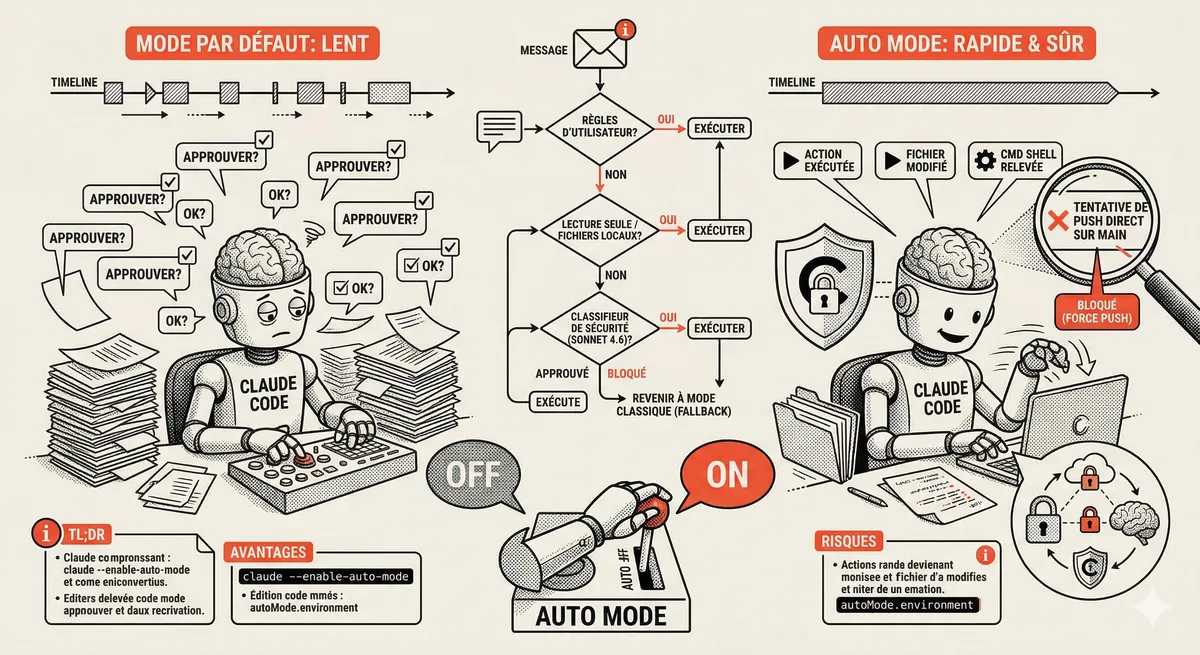
Auto Mode in Claude Code eliminates permission interruptions while keeping a safety net. A classifier analyzes every action before execution and blocks destructive operations. The sweet spot between approving everything and letting everything through.
Claude Dispatch and Computer Use: AI Takes Control of Your Mac
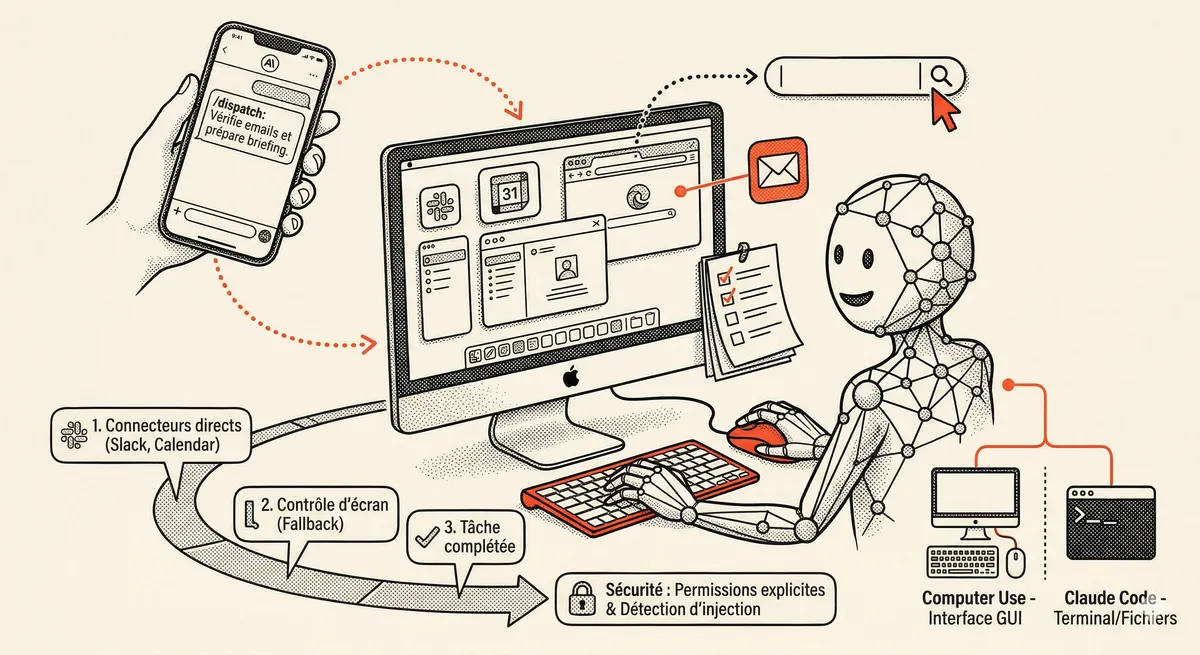
Claude can now control your Mac: click, navigate, fill forms, run builds. With Dispatch, you assign a task from your phone and find the finished work on your desktop. Research preview, macOS only.
This topic is covered in Module 6 of our Claude Code training
Useful Commands and Tips
1-day training • 60% hands-on labs • Expert instructors
View full program