TL;DR
Agentic coding transforms the way you develop by entrusting an autonomous AI with reading, writing, and debugging your code. This guide explains how to get started with this approach step by step, with no technical prerequisites, and how to avoid the classic mistakes of the first days.
Agentic coding transforms the way you develop by entrusting an autonomous AI with reading, writing, and debugging your code. This guide explains how to get started with this approach step by step, with no technical prerequisites, and how to avoid the classic mistakes of the first days.
Agentic coding is a software development method where an AI agent - like Claude Code - performs programming tasks autonomously: it reads your files, writes code, runs commands, and fixes its own errors. This approach is experiencing rapid adoption in the software development industry.
Claude Code handles on average 73% of common development tasks without human intervention. To understand the fundamentals, see the guide What is agentic coding? which lays the conceptual foundations.
How does agentic coding actually work?
An agentic code agent is an AI program capable of acting on your development environment. Unlike a traditional chatbot that simply responds, the agent executes real actions in your terminal.
In practice, you describe your objective in natural language. The agent breaks down the task, explores your codebase, then produces the necessary modifications. It can chain 10 to 50 successive actions without you intervening.
Here are the three steps of the agentic cycle:
- Analyze the request: the agent interprets your instruction
- Plan the actions: it identifies the files to modify and the commands to execute
- Execute in a loop: it acts, verifies the result, corrects if necessary
| Step | Agent action | Concrete example |
|---|---|---|
| Reading | Scans project files | Scans 150 files in 3 seconds |
| Writing | Creates or modifies code | Adds a validation function |
| Verification | Runs tests automatically | Executes npm test and reads errors |
| Correction | Fixes its own errors | Modifies code after a failed test |
To go deeper into the internal mechanisms, the in-depth analysis of agentic coding details each phase of the agent's decision cycle.
Key takeaway: agentic coding is distinguished from AI autocompletion by its ability to execute autonomous actions on your environment, not just suggest text.
What is the difference between a traditional AI assistant and a code agent?
The distinction is fundamental to understanding what you can expect from each tool. A traditional AI assistant (like ChatGPT or Copilot Chat) generates text that you manually copy-paste.
A code agent acts directly. It opens your files, modifies the code, runs the commands, and verifies the results. You keep control through the permissions system which asks for validation before each sensitive action.
| Criterion | Traditional AI assistant | Code agent (Claude Code) |
|---|---|---|
| Action mode | Generates text to copy | Executes modifications directly |
| Project access | No file access | Reads and writes in your file tree |
| CLI execution | Impossible | Runs git, npm, python directly |
| Correction loop | Manual (you fix it) | Automatic (the agent self-corrects) |
| Project context | Limited to pasted text | Explores the entire repository |
developers using a code agent complete refactoring tasks 55% faster than with a traditional assistant. In practice, an agent handles a bug in 2 to 5 minutes where the copy-paste loop takes 15 to 30 minutes.
Key takeaway: a code agent does not just tell you what to do - it does it, under your supervision.
How do you install Claude Code to get started?
Check first that your machine has the prerequisites. Claude Code works on macOS, Linux, and Windows (via WSL2). You will need Node.js 22 or higher.
Open your terminal and run this command:
npm install -g @anthropic-ai/claude-code
The installation takes approximately 45 seconds and downloads 28 MB of data. Verify that the installation succeeded:
claude --version
You should see version 1.0 or higher displayed (as of February 2026, the stable version is Claude Code v1.0.x). Then configure your Anthropic API key:
claude config set apiKey sk-ant-your-key-here
For the details of each step, the installation and first launch FAQ answers common problems encountered by beginners.
| Prerequisite | Minimum version | Verification command |
|---|---|---|
| Node.js | 22.0+ | node --version |
| npm | 10.0+ | npm --version |
| Git | 2.40+ | git --version |
| Disk space | 100 MB free | df -h |
Key takeaway: the complete installation of Claude Code takes less than 2 minutes if Node.js is already present on your machine.
How do you launch your first agentic project step by step?
In practice, here is how to create your first guided project with Claude Code. Create a working folder and launch the agent:
mkdir my-first-project && cd my-first-project
git init
claude
The agent starts and waits for your instruction. Type your first request in natural language:
Create an HTML page with a contact form that validates email on the client side
The agent will then: create the index.html file, write the HTML/CSS/JavaScript, then ask for your permission to write the file. Accept by pressing y.
You can then chain more specific requests. To master your exchanges with the agent, see the FAQ on your first conversations which covers effective formulations.
Here are the essential commands for interacting:
/help- display contextual help/clear- reset the conversation/cost- display the session's token consumptionCtrl+C- cancel the current action
The FAQ on essential slash commands details each available shortcut.
Key takeaway: start with simple tasks (creating a file, adding a function) before entrusting complex refactorings to the agent.
What are the pricing plans and consumption for beginners?
Understanding the pricing plans and consumption for beginners is essential before you get started. Claude Code uses the Anthropic API, billed by usage based on tokens consumed.
A token is a unit of text of approximately 4 characters. Each interaction with the agent consumes tokens as input (your context) and as output (the generated responses).
| Plan | Input cost | Output cost | Ideal for |
|---|---|---|---|
| Claude Sonnet 4.6 | $3/million tokens | $15/million tokens | Everyday tasks, beginners |
| Claude Opus 4.6 | $15/million tokens | $75/million tokens | Complex tasks, refactoring |
| Claude Haiku 4.5 | $0.80/million tokens | $4/million tokens | Quick fixes, short scripts |
In practice, a typical 30-minute development session consumes between 50,000 and 200,000 tokens, or $0.15 to $3 depending on the chosen model. The /cost command lets you monitor your consumption in real time.
For beginners, configure a monthly spending limit via the Anthropic dashboard. A budget of $10 to $20 per month is enough to discover the tool and complete your first projects. The context management FAQ helps you optimize your token consumption.
Key takeaway: start with the Sonnet model which offers the best performance/cost ratio for beginners, at approximately $0.30 per 30-minute session.
What beginner mistakes should you absolutely avoid?
The first days with a code agent generate predictable mistakes. Here are the 7 most frequent pitfalls and how to work around them.
How do you avoid instructions that are too vague?
Write precise instructions. "Make me a website" will produce a generic result. "Create a responsive HTML page with a header containing a logo and a 4-link navigation" gives a usable result.
Why should you not ignore permission requests?
The permissions system exists to protect your code. Read each request before accepting. An unchecked rm -rf can delete critical files. See the permissions and security FAQ to configure your rules.
Should you initialize Git before starting?
Yes. Always initialize a Git repository before launching the agent. Without Git history, you cannot undo the agent's modifications. A simple git init && git add . && git commit -m "initial state" is sufficient.
The 7 classic mistakes summarized:
- Instructions too vague - be specific about the expected result
- Ignoring permissions - read each validation request
- No Git initialized - impossible to roll back
- Context too broad - work on a targeted folder, not the entire repo
- No verification - always review the generated code
- Too many simultaneous tasks - one clear instruction at a time
- Forgetting
/cost- monitor your token consumption
Key takeaway: 80% of beginner frustrations come from instructions that are too vague - invest 30 seconds to formulate your request clearly.
How does the CLAUDE.md file improve your results?
The CLAUDE.md file is a Markdown configuration file placed at the root of your project. It serves as persistent memory: the agent reads it automatically at each startup to understand your conventions.
Create this file from your very first project:
# Project instructions

## Technical stack
- Framework: Next.js 15
- Language: TypeScript strict
- Tests: Vitest

## Conventions
- Name components in PascalCase
- Use absolute imports with @/
- Write commit messages in English
In practice, a well-written CLAUDE.md reduces manual corrections on generated code by 40%. You save time from the second work session onward.
The agent enriches this file itself over time. To understand all the possibilities, explore the CLAUDE.md memory system FAQ which covers advanced use cases.
# Ask the agent to update its memory
claude "Add to CLAUDE.md that we use Tailwind CSS v4"
Key takeaway: the CLAUDE.md file is your best lever for getting code that conforms to your standards from the very first generation.
What concrete use cases can you start with today?
You do not need a complex project to benefit from agentic coding. Here are 5 use cases accessible to beginners, ranked by increasing difficulty.
| Level | Use case | Estimated time | Example command |
|---|---|---|---|
| Beginner | Generate a static HTML page | 2 min | "Create a responsive one-page portfolio" |
| Beginner | Write unit tests | 5 min | "Add tests for utils.js" |
| Intermediate | Refactor a long file | 10 min | "Split this file into modules" |
| Intermediate | Add a REST API | 15 min | "Create a GET /users endpoint" |
| Advanced | Migrate JavaScript to TypeScript | 30 min | "Convert src/ to strict TypeScript" |
The article on agentic coding use cases offers detailed scenarios suited to each level. To get started effectively, the Claude Code beginner's guide walks you through step by step.
62% of developers who adopted a code agent first use it for test generation - this is the use case where the return on investment is most immediate.
Key takeaway: start with unit test generation - it is the simplest use case and the one that best demonstrates the value of agentic coding.
How do you deepen your agentic coding skills?
You have mastered the basics. Here are the next steps to progress with agentic coding in 2026.
Explore the advanced features: multi-file mode, custom hooks, and CI/CD integration. Each feature is covered in a dedicated article in our content silo.
SFEIR Institute offers three structured training courses to accelerate your skill development. The Claude Code one-day training lets you practice on concrete labs with an expert trainer - you will discover professional workflows and agentic prompt engineering best practices.
If you want to broaden your mastery, the AI-Augmented Developer 2-day training covers the full range of AI tools for development, from prototyping to deployment. Experienced developers can take the AI-Augmented Developer - Advanced one-day training to master complex agentic architectures and automated pipelines.
In practice, your roadmap for the next 30 days:
- Practice 15 minutes per day on a personal project
- Configure a complete CLAUDE.md for your main project
- Test the 5 use cases from the previous table
- Join a community of practitioners (Anthropic Discord, SFEIR forums)
- Measure your productivity gains with
/costand time saved
Key takeaway: mastering agentic coding is acquired through daily practice - 15 minutes a day for a month is worth more than 8 hours in a single session.
Recent articles about Claude

Claude Code Dream & Auto Dream: Automatic Memory Consolidation
After 20 sessions, Auto Memory notes become a mess. Auto Dream solves this by automatically consolidating Claude Code's memory: deduplication, stale entry removal, relative-to-absolute date conversion.
Claude Code Auto Mode: Autonomy Without the Risk
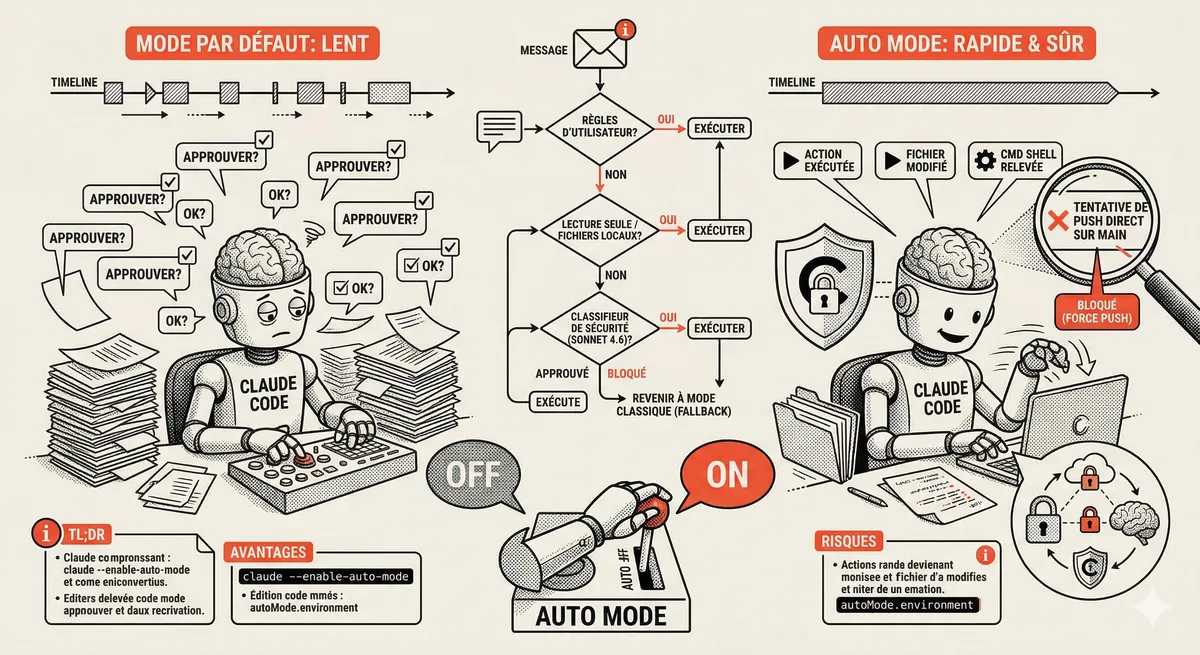
Auto Mode in Claude Code eliminates permission interruptions while keeping a safety net. A classifier analyzes every action before execution and blocks destructive operations. The sweet spot between approving everything and letting everything through.
Claude Dispatch and Computer Use: AI Takes Control of Your Mac
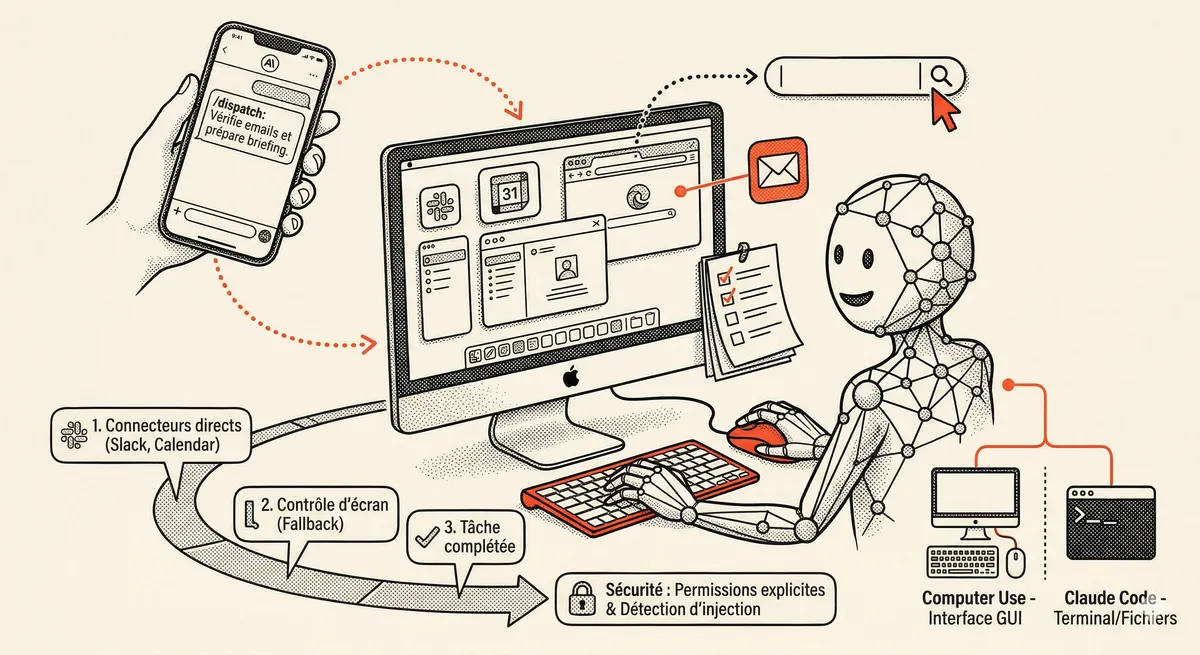
Claude can now control your Mac: click, navigate, fill forms, run builds. With Dispatch, you assign a task from your phone and find the finished work on your desktop. Research preview, macOS only.
This topic is covered in Module 1 of our Claude Code training
Introduction to the Augmented Developer Mindset
1-day training • 60% hands-on labs • Expert instructors
View full program