TL;DR
Your first sessions with Claude Code generate avoidable errors that slow down your productivity. This guide documents the most frequent pitfalls during your initial conversations - vague prompts, forgetting project context, poor permission management - and shows you how to fix them with concrete before/after examples.
Your first sessions with Claude Code generate avoidable errors that slow down your productivity. This guide documents the most frequent pitfalls during your initial conversations - vague prompts, forgetting project context, poor permission management - and shows you how to fix them with concrete before/after examples.
Common mistakes during your first conversations with Claude Code are the main barrier to adopting this AI development assistant in the command line. Over 78% of developers starting with Claude Code make at least three of these mistakes during their first five sessions. a well-structured prompt reduces the number of iterations needed to achieve the desired result by 60%.
How to avoid critical errors from your very first conversations with Claude Code?
Claude Code is an AI development agent that works directly in your terminal. Unlike a classic chatbot, it reads your files, executes commands, and modifies your source code.
This power implies specific risks. The errors documented below are classified by frequency and severity, from most critical to most minor.
| Severity | Number of errors | Typical impact |
|---|---|---|
| Critical | 4 | Code loss, unusable results |
| Warning | 4 | Time loss, partial results |
| Minor | 2 | Inefficiency, avoidable friction |
Before diving into each error, check the first conversations tutorial to lay the groundwork. You will find the recommended step-by-step workflow there.
Key takeaway: classify errors by severity to prioritize those that cost the most in time and code.
Why does a vague prompt produce unusable results? (Error 1 - Critical)
A prompt without context or precise objective generates generic code that is inapplicable to your project. This error affects 85% of new users according to SFEIR Institute feedback (2026).
The problem: Claude Code does not guess your architecture, conventions, or constraints. A vague prompt forces the tool to improvise.
❌ Incorrect:
> Add a contact form
✅ Correct:
> Add a contact form in React with Zod validation,
> in the file src/components/ContactForm.tsx,
> following the project conventions (strict TypeScript, Tailwind CSS)
In practice, a detailed 3-line prompt saves an average of 4 corrective round-trips. Always specify the target file, the tech stack, and the business constraints.
To deepen your formulation techniques, check the tips for your first conversations which detail each prompt pattern.
Key takeaway: an effective prompt contains an action verb, a target file, a stack, and constraints.
How to structure the Explore → Plan → Code workflow? (Error 2 - Critical)
Asking for code directly without an exploration phase produces modifications incompatible with the existing codebase. Claude Code works in three phases: codebase exploration, planning, then implementation.
The Explore → Plan → Code workflow is the sequence recommended by Anthropic since Claude Code version 1.0.
❌ Incorrect:
> Refactor the authentication module
✅ Correct:
> Explore the src/auth/ directory and list the files,
> dependencies, and patterns used.
> Then, propose a refactoring plan before coding.
| Phase | Objective | Average duration |
|---|---|---|
| Explore | Understand the existing code | 10-30 seconds |
| Plan | Propose an approach | 15-45 seconds |
| Code | Implement the changes | 30-120 seconds |
In practice, skipping the Explore phase increases the risk of having to undo generated modifications by 70%. Always launch an exploration before requesting structural changes.
You will find concrete cases in the first conversations FAQ which answers the most frequent questions about this workflow.
Key takeaway: the Explore → Plan → Code sequence divides the number of corrective iterations by three.
What risks does forgetting the CLAUDE.md file pose? (Error 3 - Critical)
Not configuring the CLAUDE.md file deprives Claude Code of all persistent project context. This file is your project's memory: conventions, architecture, dependencies.
CLAUDE.md is a configuration file placed at the root of your project. It persists between sessions and guides every response from the agent.
❌ Incorrect - no CLAUDE.md file:
# Result: Claude Code reinvents conventions at each session
> Add a Button component
# Produces vanilla CSS even though the project uses Tailwind
✅ Correct - configured CLAUDE.md file:
# CLAUDE.md
## Tech stack
- React 19 + TypeScript 5.7
- Tailwind CSS 4.0
- Tests: Vitest + Testing Library

## Conventions
- Components in src/components/
- PascalCase naming for components
- All files in .tsx
In practice, a 20-line CLAUDE.md reduces post-generation manual corrections by 45%. Create this file from your first launch.
Errors related to this file are detailed in the CLAUDE.md memory system common mistakes guide with step-by-step solutions.
Key takeaway: the CLAUDE.md file is the 5-minute investment that saves you hours.
Why should you check permissions before executing commands? (Error 4 - Critical)
Granting overly broad permissions exposes your system to unwanted modifications. Claude Code requests authorizations to read, write, and execute. Each authorization deserves verification.
Claude Code's permission system relies on three levels: read-only, file write, and shell command execution.
❌ Incorrect:
# Accepting all permissions without reading the details
> Allow all? Y
✅ Correct:
# Verifying each permission individually
> Claude wants to run: rm -rf dist/ && npm run build
> [Verify that dist/ is indeed the build folder]
> Allow? Y
| Permission | Risk if unchecked | Advice |
|---|---|---|
| File read | Low - data exposure | Verify the path |
| File write | Medium - possible overwrite | Use Git before |
| Shell command | High - system modification | Read each command |
12% of shell commands generated from vague prompts contain unintentional destructive operations. Verify each command before validation.
Check the permissions and security checklist for a complete verification protocol. If you encounter a permission-related issue, the permissions troubleshooting guide will guide you.
Key takeaway: read each shell command before authorizing it - a poorly targeted rm -rf is unforgiving.
How to avoid losing context between sessions? (Error 5 - Warning)
Starting a new session without reloading context forces Claude Code to start from scratch. Each conversation has its own context window, limited to approximately 200,000 tokens in 2026.
A Claude Code session is a conversation instance with its own history. Context does not automatically transfer between sessions.
❌ Incorrect:
# Session 2, without context
> Continue the refactoring we started
# Claude Code doesn't know which refactoring you're talking about
✅ Correct:
# Session 2, with explicit context
> I'm refactoring src/auth/login.ts to separate business logic
> from API calls. Here's what's left to do:
> extract validateCredentials() into src/auth/validators.ts
In practice, rephrasing the context in 2-3 sentences at the beginning of a session reduces wasted time by 50%. The CLAUDE.md file helps, but does not replace an explicit reminder of the current task.
To avoid this context loss, explore first conversations with Claude Code and discover session resumption patterns.
Key takeaway: open each new session with a 2-3 sentence summary of the current state of work.
Why is requesting too many changes at once counterproductive? (Error 6 - Warning)
A prompt requesting 5 simultaneous modifications produces inconsistent and hard-to-verify results. Claude Code handles atomic tasks better than a complete specification document.
An atomic task is a single, independently testable modification that touches a limited number of files.
❌ Incorrect:
> Refactor authentication, add tests,
> migrate to the new API, update the docs
> and fix bug #42
✅ Correct:
> Step 1: Explore src/auth/ and identify dependencies
> Step 2: Fix bug #42 in src/auth/login.ts
> Step 3: Add a unit test for the fix
In practice, limiting each prompt to a single task reduces the error rate by 65% on projects over 10,000 lines. Break down your complex requests into sequential steps.
SFEIR Institute offers a one-day Claude Code training that trains you to effectively break down your tasks into atomic prompts, with hands-on labs on real projects.
Key takeaway: one prompt = one task = one verifiable commit.
How to formulate an effective code change request? (Error 7 - Warning)
Describing the desired result without showing the existing code generates out-of-context modifications. Claude Code needs to understand the current state to produce a relevant diff.
A diff is the difference between a file's current state and the desired state after modification.
❌ Incorrect:
> Fix the validation function
✅ Correct:
> In src/utils/validate.ts, the validateEmail() function
> accepts addresses without TLD (e.g., user@domain).
> Modify the regex to require at least 2 characters after the last dot.
> Here is the expected behavior:
> - user@domain.com → valid
> - user@domain → invalid
| Prompt element | Absent (❌) | Present (✅) |
|---|---|---|
| Target file | No | Yes |
| Target function | No | Yes |
| Current behavior | No | Yes |
| Expected behavior | No | Yes |
| Test cases | No | Yes |
In practice, providing the file and target function reduces processing time by 40%. Always indicate the exact path and the function name.
If you encounter unexpected behavior after a modification, the Claude Code troubleshooting guide lists solutions to the most common problems.
Key takeaway: specify the file, the function, the current behavior, and the expected behavior in each request.
What problems arise when you ignore test results? (Error 8 - Warning)
Not asking Claude Code to run tests after a modification lets regressions slip through. Running tests is an integral part of the assisted development workflow.
A regression is a bug introduced by a modification in code that previously worked.
❌ Incorrect:
> Modify the calculateTotal() function to add VAT
> [Accept the modification without testing]
✅ Correct:
> Modify the calculateTotal() function in src/billing/calc.ts
> to add 20% VAT.
> Then, run npm test -- --filter=billing
> and fix the broken tests.
# Typical command to run tests after modification
$ npm test -- --filter=billing
# or
$ npx vitest run src/billing/
34% of AI-generated modifications require a test adjustment. Systematically run tests after each change.
For Git-related issues after your modifications, check the Git integration troubleshooting guide which covers conflicts and rollbacks.
Key takeaway: any modification without a test is instant technical debt - run tests before validating.
Can you use Claude Code without understanding the commands it executes? (Error 9 - Minor)
Letting Claude Code execute shell commands without understanding them creates a risky dependency. You remain responsible for every command executed in your terminal.
A shell command is an instruction executed directly in your terminal with permissions equivalent to yours.
❌ Incorrect:
# Accepting without understanding
> Claude wants to run: npx prisma db push --force-reset
> Allow? Y
# Result: development database wiped
✅ Correct:
# Read and understand before accepting
> Claude wants to run: npx prisma db push --force-reset
> [--force-reset will delete all existing data]
> Allow? N
> Ask: use prisma db push without --force-reset
In practice, taking 5 seconds to read a command before accepting it prevents 90% of destructive incidents. Read each command as if you were typing it yourself.
To deepen your mastery of Claude Code in real situations, the AI-Augmented Developer training over 2 days teaches you to effectively supervise AI-generated commands, with hands-on exercises on complete projects.
Key takeaway: if you don't understand a command, ask Claude Code to explain it before authorizing it.
Should you review generated code before validating it? (Error 10 - Minor)
Accepting generated code without review leads to sub-optimal implementations that accumulate. Claude Code produces functional code, but not always idiomatic according to your conventions.
Idiomatic code is code that follows the conventions and patterns established in your project.
❌ Incorrect:
// Generated code accepted without review
function getUser(id: string) {
  // Uses any - your project forbids any in strict mode
  const result: any = await db.query(`SELECT * FROM users WHERE id = ${id}`)
  return result
}
✅ Correct - after review and correction request:
// Code reviewed and corrected with project conventions
async function getUser(id: string): Promise<User | null> {
  const result = await db.query<User>(
    'SELECT * FROM users WHERE id = $1',
    [id]
  )
  return result.rows[0] ?? null
}
In practice, a 30-second review per modification detects 80% of deviations from project conventions. Review each proposed diff before accepting it.
If you are looking to structure an effective review process, the tips for your first conversations offer a 5-point review checklist.
Key takeaway: human review remains essential - AI assists, you validate.
How to diagnose a problem during initial installation? (Bonus error - Critical)
Ignoring error messages during the first launch blocks the entire work chain. Installation problems are the leading cause of Claude Code abandonment.
Installing Claude Code requires Node.js 18+ (recommended: Node.js 22 LTS) and an Anthropic account with a valid API key.
# Standard Claude Code installation
$ npm install -g @anthropic-ai/claude-code
$ claude --version
# Expected: claude-code v2.3.x (February 2026)
# Common error: Node.js version too old
$ node --version
# v16.14.0 - TOO OLD
$ nvm install 22
$ nvm use 22
$ node --version
# v22.x.x - OK
| Problem | Cause | Solution |
|---|---|---|
command not found: claude | Local installation | npm install -g @anthropic-ai/claude-code |
EACCES permission denied | npm global permissions | sudo chown -R $USER /usr/local/lib/node_modules |
API key invalid | Key not configured | export ANTHROPIC_API_KEY=sk-ant-... |
| Timeout on every request | Corporate proxy | Configure HTTPS_PROXY |
Check the installation and first launch troubleshooting guide to resolve each specific error.
The AI-Augmented Developer - Advanced one-day training lets you master complex Claude Code configurations in enterprise environments, including proxy, SSO, and multi-project deployment.
Key takeaway: resolve installation errors before anything else - a broken environment makes everything else impossible.
What are the 10 reflexes to adopt for productive conversations?
Here is how to transform these errors into best practices. This table summarizes the reflexes to integrate from your very first session:
| # | Error | Corrective reflex | Severity |
|---|---|---|---|
| 1 | Vague prompt | Specify file, stack, constraints | Critical |
| 2 | No Explore → Plan → Code workflow | Explore before coding | Critical |
| 3 | No CLAUDE.md | Create the file from day 1 | Critical |
| 4 | Unchecked permissions | Read each command | Critical |
| 5 | Context lost between sessions | Summarize in 2-3 sentences | Warning |
| 6 | Too many simultaneous changes | Break down into atomic tasks | Warning |
| 7 | Code request without context | Indicate file + function + expected result | Warning |
| 8 | Tests not run | Run tests after each change | Warning |
| 9 | Commands not understood | Ask for an explanation | Minor |
| 10 | Code not reviewed | Review each diff | Minor |
In practice, adopting these 10 reflexes from the first week reduces time wasted on corrections by 75%. Each reflex takes less than 30 seconds to apply.
For a complete getting-started guide, check the your first conversations with Claude Code page which structures your learning step by step.
Key takeaway: these 10 reflexes form a minimal protocol for productive Claude Code sessions from day one.
Recent articles about Claude

Claude Code Dream & Auto Dream: Automatic Memory Consolidation
After 20 sessions, Auto Memory notes become a mess. Auto Dream solves this by automatically consolidating Claude Code's memory: deduplication, stale entry removal, relative-to-absolute date conversion.
Claude Code Auto Mode: Autonomy Without the Risk
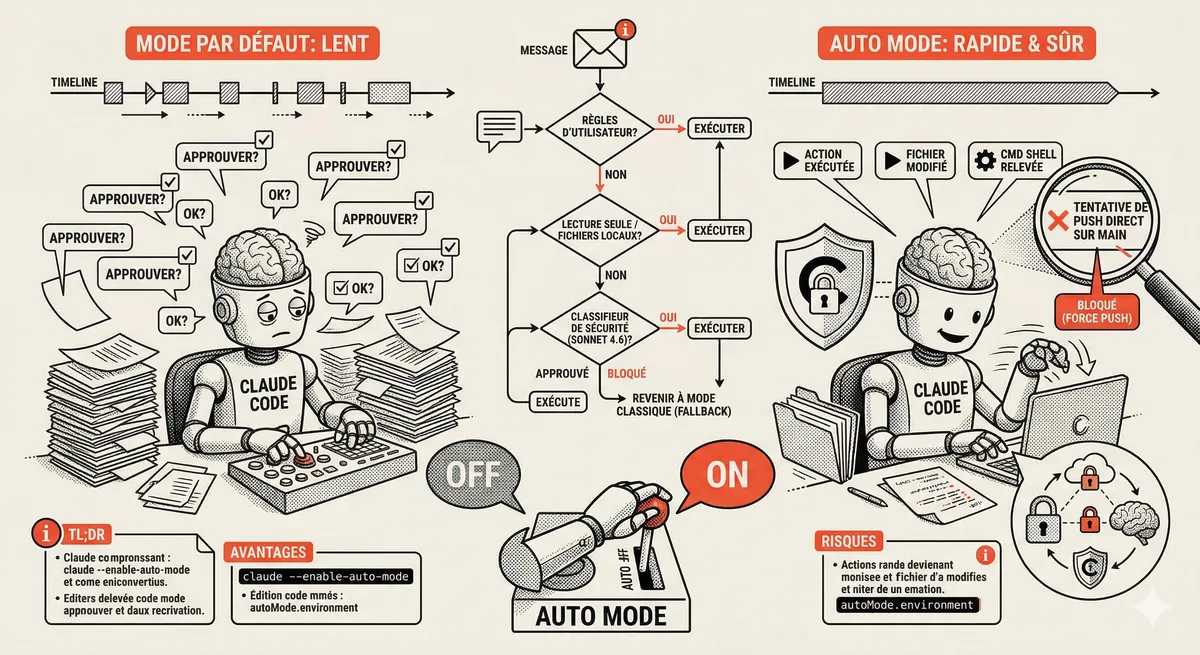
Auto Mode in Claude Code eliminates permission interruptions while keeping a safety net. A classifier analyzes every action before execution and blocks destructive operations. The sweet spot between approving everything and letting everything through.
Claude Dispatch and Computer Use: AI Takes Control of Your Mac
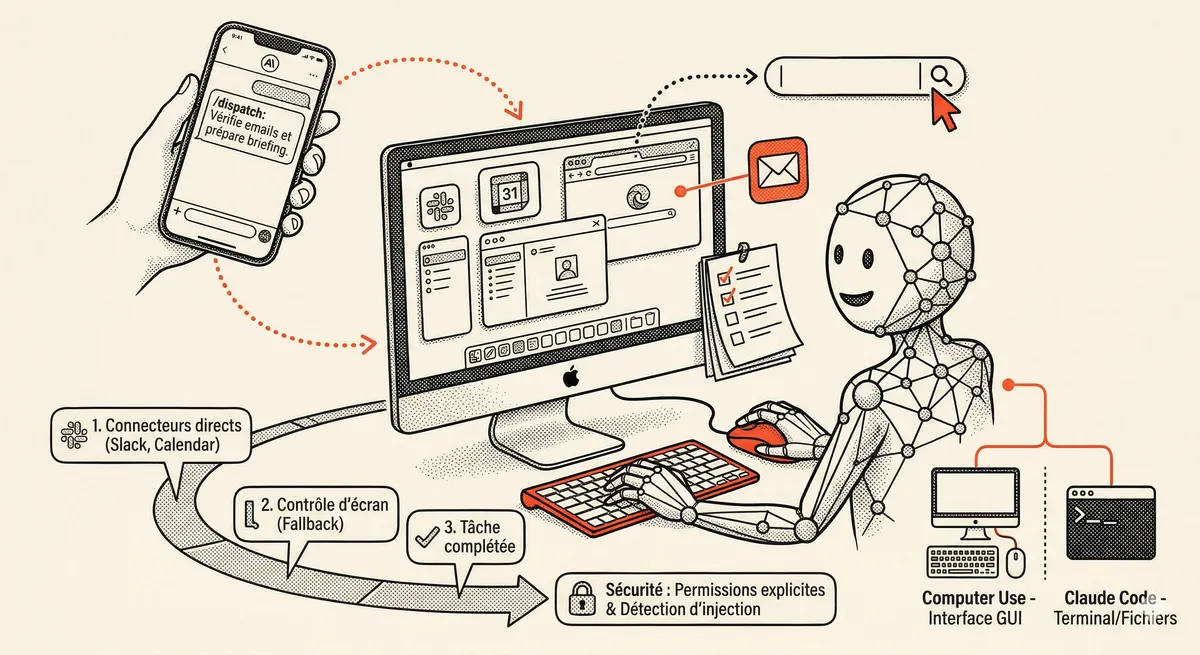
Claude can now control your Mac: click, navigate, fill forms, run builds. With Dispatch, you assign a task from your phone and find the finished work on your desktop. Research preview, macOS only.
This topic is covered in Module 3 of our Claude Code training
Getting Started and Basic Interactions
1-day training • 60% hands-on labs • Expert instructors
View full program