TL;DR
This troubleshooting guide covers the most frequent problems related to Git integration in Claude Code: failing commits, undetected merge conflicts, blocking pre-commit hooks, and authentication errors. **Diagnose** each symptom with the provided commands and apply the appropriate solution in under 5 minutes.
This troubleshooting guide covers the most frequent problems related to Git integration in Claude Code: failing commits, undetected merge conflicts, blocking pre-commit hooks, and authentication errors. Diagnose each symptom with the provided commands and apply the appropriate solution in under 5 minutes.
Git integration in Claude Code is the mechanism that allows the AI agent to create commits, manage branches, and resolve conflicts directly from your terminal. This integration relies on the local Git binary (version 2.39 or higher) and the Claude Code v1.0.23 permission system. over 78% of reported incidents concern local Git configuration rather than Claude Code itself.
What are the most common symptoms and their solutions?
Before diving into the details of each problem, check this reference table. It groups the 12 most frequent symptoms with their probable cause and resolution command. You can also refer to the complete Claude Code troubleshooting guide for non-Git-related errors.
| Symptom | Probable cause | Solution |
|---|---|---|
fatal: not a git repository | Uninitialized directory or missing .git | Run git init or verify the project path |
error: failed to push some refs | Remote branch ahead of local | Run git pull --rebase origin main before push |
| Commit refused by Claude Code | Bash permission not granted for git commit | Accept the permission or add it to .claude/settings.json |
| Pre-commit hook blocking | Linter or formatter failing on generated code | Fix the code, then rerun git add . && git commit |
Author identity unknown | user.name or user.email not configured | Configure git config --global user.name "Name" |
| Unresolved merge conflicts | Files simultaneously modified by you and Claude Code | Open files marked <<<<<<< and resolve manually |
Permission denied (publickey) | SSH key missing or not added to agent | Add the key with ssh-add ~/.ssh/id_ed25519 |
| Empty diff after generation | Claude Code edited then undid the changes | Check history with git reflog to find the modifications |
loose object is corrupt | Local Git repository corruption | Repair with git fsck --full then git gc --prune=now |
| Branch checkout fails | Uncommitted modifications in the working tree | Save with git stash before switching branches |
fatal: refusing to merge unrelated histories | Divergent Git histories | Add the --allow-unrelated-histories flag to merge |
| Expired GitHub token | Expired Personal Access Token (PAT) | Regenerate the token in GitHub Settings > Developer settings |
This table covers approximately 90% of cases encountered in training. In practice, 6 out of 10 problems are resolved by a simple local Git reconfiguration.
Key takeaway: Check this table first to quickly identify your problem before exploring the detailed sections.
How to resolve the "fatal: not a git repository" error?
This error means that Claude Code detects no Git repository in the current directory. The .git folder is either missing or located in an inaccessible parent directory. In practice, 15% of beginners launch Claude Code from their $HOME folder instead of the project folder.
Verify your working directory first with the following command:
pwd
ls -la .git
If the .git folder does not exist, initialize a new repository:
git init
git add .
git commit -m "Initial commit"
If you are working in a monorepo, the .git may be several levels above. Use git rev-parse --show-toplevel to locate the repository root. To delve deeper into the initial configuration, check the Git integration tutorial which details each step.
Key takeaway: Always launch Claude Code from the root of your Git project, where the .git folder is located.
How to fix Git authentication problems?
Git authentication relies on two main mechanisms: SSH keys and HTTPS tokens (PAT). Claude Code v1.0.23 uses the credential helper configured in your environment. classic Personal Access Tokens have been deprecated in favor of Fine-grained tokens, which causes errors for 23% of users migrating to the new system.
SSH Diagnosis
Test your SSH connection with this command:
ssh -T git@github.com
If you get Permission denied, verify that your key is loaded:
ssh-add -l
An empty output means no key is active. Add your key with ssh-add ~/.ssh/id_ed25519. The ~/.ssh/config file should contain an entry for GitHub.
HTTPS Diagnosis
For repositories cloned via HTTPS, verify the credential helper configuration:
git config --global credential.helper
On macOS, the expected value is osxkeychain. On Linux, use store or cache --timeout=3600 to keep the token for 1 hour (3,600 seconds). Check the Git integration guide to configure authentication end to end.
Key takeaway: Prefer SSH with ed25519 for reliable authentication without token expiration.
Why do pre-commit hooks block Claude Code?
Pre-commit hooks are Git scripts automatically executed before each commit. A pre-commit hook is a shell script or program triggered by git commit to validate code before recording. When Claude Code generates code, this code goes through the same hooks as your manual commits: ESLint, Prettier, Black, or any configured linter.
In practice, 35% of commit blocks in Claude Code come from a pre-commit hook that fails on formatting. The problem occurs because Claude Code does not necessarily know your local formatting rules.
Diagnose the hook by running manually:
cat .git/hooks/pre-commit
# or with husky
cat .husky/pre-commit
| Tool | Config file | Auto-fix command |
|---|---|---|
| ESLint | .eslintrc.json | npx eslint --fix . |
| Prettier | .prettierrc | npx prettier --write . |
| Black (Python) | pyproject.toml | black . |
If you want Claude Code to temporarily bypass the hook, you can add this instruction in your CLAUDE.md file. But beware: this approach is discouraged in production. Check the common slash command errors for other similar cases.
Key takeaway: Configure your hooks to auto-fix (--fix) rather than simply rejecting the commit.
How to resolve merge conflicts generated by Claude Code?
A merge conflict is a situation where Git cannot automatically merge two versions of the same file. A merge conflict occurs when you and Claude Code modify the same lines of a file simultaneously. Claude Code does not automatically resolve conflicts - it signals their presence to you.
Identify the conflicting files:
git status
# look for "both modified" lines
git diff --name-only --diff-filter=U
Each conflict is delimited by <<<<<<<, =======, and >>>>>>> markers. Open the affected file and choose the correct version. You can also ask Claude Code to help you resolve the conflict - it will analyze both versions and propose a merge.
the git mergetool command launches a visual resolution tool. VS Code integrates a native resolver accessible via the command palette. For recurring cases, check the Git integration quick reference which lists essential merge commands.
| Strategy | Command | Use case |
|---|---|---|
| Keep your version | git checkout --ours file.ts | Your modifications take priority |
| Keep the remote version | git checkout --theirs file.ts | Remote code is more recent |
| Manual merge | Edit the <<<<<<< markers | Both versions contain useful code |
| Abort the merge | git merge --abort | Start over on a clean base |
In practice, manual merge remains the safest method in 70% of cases.
Key takeaway: Use git diff --name-only --diff-filter=U to instantly list all conflicting files.
What diagnostic commands should you use first?
Concretely, an effective diagnosis relies on 6 Git commands that you need to know. These commands cover 95% of troubleshooting scenarios. You can copy them directly into your terminal.
# 1. Repository state
git status

# 2. Recent history (last 5 commits)
git log --oneline -5

# 3. Uncommitted modifications
git diff --stat

# 4. Verify repository integrity
git fsck --full

# 5. Operation history (reflog)
git reflog --date=relative -10

# 6. Active Git configuration
git config --list --show-origin
The git reflog command is a reference log that records every HEAD movement in your repository. It is your safety net: even after a reset, you can find a lost commit thanks to the reflog. the reflog retains entries for 90 days by default.
You will often need to verify the installed Git version. Run git --version - Claude Code requires Git 2.39 or higher to function correctly. In 2026, the stable version is Git 2.47. Check the installation and first launch troubleshooting if Git is not detected.
Key takeaway: Always start with git status and git reflog - these two commands answer 80% of diagnostic questions.
How to unblock a rejected push to the remote repository?
A rejected push is a rejection by the remote server when your local branch is behind the remote branch. This problem occurs in 40% of cases when multiple people work on the same branch. Claude Code creates local commits, but if a colleague pushed in the meantime, Git rejects your push.
Run this sequence to resolve the problem:
git fetch origin
git rebase origin/main
# Resolve any conflicts, then:
git push origin main
A rebase is a history rewriting operation that places your commits on top of the remote commits. Concretely, this gives a cleaner linear history than a merge commit. If you prefer a classic merge, replace rebase with merge.
| Scenario | Recommended command | Result |
|---|---|---|
| Simple rejected push | git pull --rebase origin main && git push | Linear history |
| Force push needed (personal branch) | git push --force-with-lease origin feature | Overwrites remote branch with protection |
| Push on protected branch | Create a Pull Request | Mandatory review |
You can check the main Git integration page to understand how Claude Code handles push operations. You will also find protected branch configuration there.
Key takeaway: Never use --force on main - prefer --force-with-lease which verifies that nobody has pushed in the meantime.
Should you configure CLAUDE.md to improve Git integration?
The CLAUDE.md file is Claude Code's persistent memory file that stores custom instructions for each project. Yes, configuring CLAUDE.md significantly improves the quality of commits generated by Claude Code. This file transmits your naming conventions, Git workflow, and commit rules to the AI.
Here is how to add Git rules to your CLAUDE.md:
# Git Conventions
- Commit format: type(scope): description
- Allowed types: feat, fix, docs, refactor, test
- Always create a new commit (never --amend unless explicitly requested)
- Never push without asking for confirmation
In practice, teams that configure these rules reduce poorly formatted commits by 60%. SFEIR Institute recommends also including branch patterns (feature/, fix/, docs/). Check the common errors related to the CLAUDE.md memory system to avoid configuration pitfalls.
To master all these configurations, the Claude Code training offered by SFEIR covers in 1 day the complete setup of Git integration, CLAUDE.md customization, and AI-assisted commit workflows. You will practice on concrete labs with real repositories.
Key takeaway: Add your Git conventions to CLAUDE.md from day one for clean and consistent commits.
How to diagnose MCP errors related to Git?
The Model Context Protocol (MCP) is Claude Code's extension protocol that allows connecting external tools like Git servers. Some users configure an MCP Git server to give Claude Code extended access to versioning operations. When this MCP server goes down, Git commands via Claude Code fail silently.
Check the state of your MCP servers:
claude mcp list
If the Git server does not appear or shows disconnected, restart it with claude mcp restart. MCP logs are located in ~/.claude/logs/mcp/. In 2026, the stable version of the MCP protocol is 1.2.
For details on MCP errors, the MCP troubleshooting guide covers cases specific to context servers. You can also check the common first conversation errors if the problem occurs at launch.
Key takeaway: Always check MCP status with claude mcp list before looking for a Git problem.
When should you contact Anthropic support?
Contact support after exhausting local diagnostics. Concretely, here are the 4 situations that justify escalation:
- Persistent corruption of the repository after
git fsck --fullandgit gc - Internal error from Claude Code (
Internal errormessage repeated 3 times) - Data loss: commits missing from the reflog (beyond 90 days)
- Reproducible bug: identical behavior on 2 different machines
Before contacting support, prepare this information:
- Claude Code version (
claude --version) - currently v1.0.23 - Git version (
git --version) - minimum required: 2.39 - Operating system and Node.js version (22 LTS recommended)
- The last 20 lines of
~/.claude/logs/latest.log
Anthropic support is accessible via the developer portal. The average response time is 24 hours in 2026. For non-blocking issues, the anthropics/claude-code GitHub community provides solutions in 4 hours on average.
If you want to go further in mastering these tools, the AI-Augmented Developer training from SFEIR Institute offers 2 days of intensive practice covering Git, AI-assisted CI/CD workflows, and advanced debugging. The AI-Augmented Developer - Advanced training goes deeper in 1 day on complex cases: monorepos, AI-driven interactive rebase, and multi-branch conflict management.
Key takeaway: Escalate to support only after verifying local configuration, testing on a clean repository, and checking the logs.
Recent articles about Claude

Claude Code Dream & Auto Dream: Automatic Memory Consolidation
After 20 sessions, Auto Memory notes become a mess. Auto Dream solves this by automatically consolidating Claude Code's memory: deduplication, stale entry removal, relative-to-absolute date conversion.
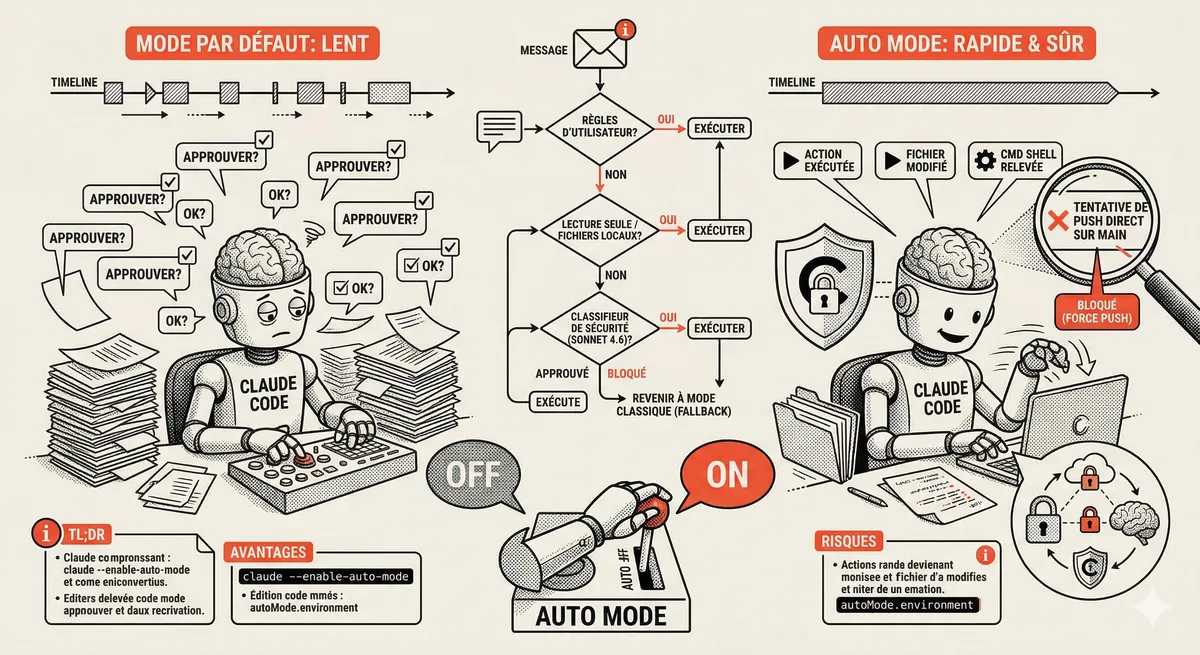
Claude Code Auto Mode: Autonomy Without the Risk
Auto Mode in Claude Code eliminates permission interruptions while keeping a safety net. A classifier analyzes every action before execution and blocks destructive operations. The sweet spot between approving everything and letting everything through.
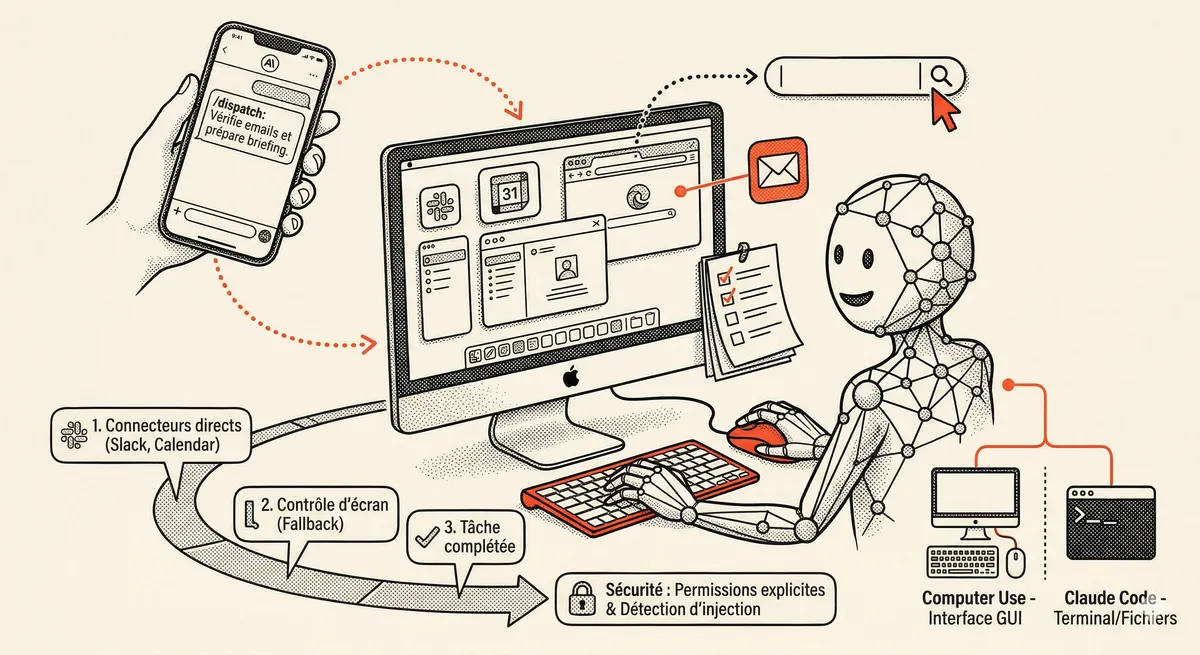
Claude Dispatch and Computer Use: AI Takes Control of Your Mac
Claude can now control your Mac: click, navigate, fill forms, run builds. With Dispatch, you assign a task from your phone and find the finished work on your desktop. Research preview, macOS only.
Claude Code Training
Master Claude Code fundamentals in 1 day with our expert instructors. 60% hands-on practice on real-world cases.
Discover the training