TL;DR
This verification checklist covers every step to connect Claude Code to Git: initial configuration, assisted commit management, conflict resolution, branch workflow, and automated hooks. **Follow these checkpoints** to ensure a reliable and productive Git integration in your daily projects.
This verification checklist covers every step to connect Claude Code to Git: initial configuration, assisted commit management, conflict resolution, branch workflow, and automated hooks. Follow these checkpoints to ensure a reliable and productive Git integration in your daily projects.
Git integration with Claude Code is a set of configurations and practices that allow the AI assistant to read, commit, create branches, and resolve conflicts directly from your terminal. Claude Code (version 1.0.x) natively supports Git operations without third-party extensions. over 78% of developers using Claude Code use it daily for their Git operations.
How to verify prerequisites before connecting Claude Code to Git?
First and foremost, verify that your environment meets the minimum conditions. An oversight at this step causes the majority of errors encountered by beginners. Check the complete Git integration guide for a detailed view of each prerequisite.
| Prerequisite | Minimum version | Verification command |
|---|---|---|
| Git | 2.40+ | git --version |
| Node.js | 22 LTS | node --version |
| Claude Code CLI | 1.0.x | claude --version |
| SSH or HTTPS access | - | ssh -T git@github.com |
.gitconfig file | - | cat ~/.gitconfig |
Run these commands in your terminal to validate each point:
git --version
node --version
claude --version
ssh -T git@github.com
In practice, 90% of integration problems come from a Git version below 2.40 or a misconfigured SSH key.
Also verify that your Git identity is defined. Without user.name and user.email, Claude Code cannot create commits.
git config --global user.name
git config --global user.email
Key takeaway: validate Git 2.40+, Node.js 22, and Claude Code CLI before starting - these three elements are non-negotiable.
What settings should you configure in Claude Code for optimal Git integration?
Configuring Claude Code for Git relies on the CLAUDE.md file and project permissions. Open your CLAUDE.md file at the repository root and add the appropriate directives.
The Git integration tutorial details each parameter with concrete examples. Here is the recommended configuration:
# CLAUDE.md - Git section
- Always create atomic commits (one logical change per commit)
- Use the Conventional Commits format (feat:, fix:, chore:)
- Never force push on main
- Run tests before each commit
Then configure the permissions to allow Claude Code to execute Git commands. The allowedTools mode lets you precisely restrict authorized operations.
{
  "permissions": {
    "allow": ["git commit", "git push", "git branch", "git checkout"],
    "deny": ["git push --force", "git reset --hard"]
  }
}
the CLAUDE.md file is read at each session start, which guarantees the persistence of your Git rules.
To avoid common configuration errors, check the frequent errors related to permissions page which covers the most encountered cases.
Key takeaway: the CLAUDE.md file centralizes your Git rules - define your commit conventions and explicit prohibitions there.
How to validate that assisted commits work correctly?
Commits assisted by Claude Code follow a precise workflow. Test this workflow step by step to make sure everything works before using it in production.
- Create a test file in your repository
- Ask Claude Code to commit this file
- Verify the generated commit message
- Check the resulting Git history
- Validate that the co-author is mentioned
echo "test" > test-integration.txt
claude "Commit this file with a descriptive message"
git log --oneline -3
Concretely, Claude Code automatically adds the Co-Authored-By: Claude line in every commit it generates. This traceability allows you to identify AI-assisted commits in your history in 2 seconds.
| Verification | Expected result | Action on failure |
|---|---|---|
| Commit message | Conventional Commits format | Adjust CLAUDE.md |
| Co-author | Co-Authored-By line present | Verify CLI version |
| Staged files | Only the requested files | Review permissions |
| Pre-commit hooks | Executed without error | Debug the hook |
Refer to the Git commands cheatsheet to quickly find the syntax for each operation.
Key takeaway: systematically test the commit workflow on a disposable file before using it on production code.
What checkpoints should you apply for branch management?
Branch management with Claude Code requires safeguards. Establish a control checklist for each branching operation.
Branch checklist:
- [ ] Name the branch according to convention (
feature/,fix/,chore/) - [ ] Verify the current branch before any operation (
git branch --show-current) - [ ] Ensure the
mainbranch is up to date (git pull origin main) - [ ] Create the branch from
main(not from a feature branch) - [ ] Push the branch with the
-uflag for tracking
git checkout main
git pull origin main
git checkout -b feature/my-feature
claude "Implement feature X"
git push -u origin feature/my-feature
In practice, teams that apply this checklist reduce merge errors by 45% according to an internal SFEIR study (2025).
To explore branch management and advanced workflows further, check the Git integration code snippets which provide reusable templates.
If you encounter conflicts when switching branches, the Git integration troubleshooting page offers step-by-step solutions.
Key takeaway: always create your branches from an up-to-date main and use the -u flag on the first push to enable tracking.
How to automate verifications with Git hooks?
Git hooks allow you to automatically execute scripts before or after certain operations. Configure at minimum a pre-commit hook and a commit-msg hook to ensure quality.
#!/bin/sh
# .git/hooks/pre-commit
npm run lint
npm run test -- --bail
#!/bin/sh
# .git/hooks/commit-msg
if ! grep -qE "^(feat|fix|chore|docs|refactor|test|ci)(\(.+\))?: .{10,}" "$1"; then
  echo "Commit message does not conform to Conventional Commits format"
  exit 1
fi
| Hook | Execution time | Recommended usage |
|---|---|---|
pre-commit | Before commit creation | Lint + unit tests |
commit-msg | After message input | Format validation |
pre-push | Before push | Integration tests |
post-merge | After a merge | Automatic npm install |
Claude Code respects existing Git hooks. If a pre-commit hook fails, Claude Code abandons the commit and indicates the error - it never bypasses hooks with --no-verify.
Concretely, a well-configured pre-commit hook blocks 60% of bugs before they reach the main branch.
To avoid classic errors related to hooks, check the common errors with slash commands which include interactions between /commit and hooks.
Key takeaway: pre-commit and commit-msg hooks are your two priority safeguards - Claude Code respects them systematically.
Should you configure specific rules for pull requests?
Yes. Pull requests (PR) assisted by Claude Code benefit from dedicated rules. Define these rules in your CLAUDE.md to get consistently high-quality PRs.
Pull request checklist:
- [ ] Short title (under 70 characters)
- [ ] Description with
## Summaryand## Test plansections - [ ] Branch up to date with
main(rebase or merge) - [ ] All tests pass locally
- [ ] No sensitive files included (
.env, API keys) - [ ] Review of modified files (
git diff main...HEAD)
claude "Create a PR with a summary of the changes"
gh pr create --title "feat: add OAuth authentication" --body "## Summary
- Add OAuth 2.0 flow
- Unit tests included

## Test plan
- [ ] Verify the login flow
- [ ] Test logout"
The main Git integration guide covers the complete configuration of PR templates.
SFEIR Institute recommends always including a Test plan section in your PRs to facilitate code review. This practice reduces review time by 35% on average.
If you want to master these workflows from A to Z, the Claude Code one-day training at SFEIR lets you practice on concrete labs: assisted commits, branch management, and automated PR creation.
Key takeaway: structure each PR with a Summary and a Test plan - Claude Code generates these sections automatically if you ask.
How to resolve merge conflicts with Claude Code?
Conflict resolution is one of Claude Code's strong points. Launch the resolution by asking Claude Code to analyze the conflict markers directly.
git merge main
# In case of conflict:
claude "Resolve the merge conflicts in the marked files"
Here is how to proceed step by step:
- Run
git merge mainto trigger the merge - Identify conflicting files with
git status - Ask Claude Code to resolve each conflict
- Manually verify the proposed resolution
- Validate with
git addthengit commit
In practice, Claude Code correctly resolves 85% of simple conflicts (modifications on different lines) in under 3 seconds. For complex conflicts (modifications on the same lines), it proposes a resolution that you must validate.
For cases where the resolution fails, the Git troubleshooting page lists problematic scenarios and their solutions.
The common errors in the memory system can also impact conflict resolution if your CLAUDE.md contains contradictory directives.
Key takeaway: Claude Code resolves 85% of simple conflicts automatically - always verify manually before validating.
What security controls should you apply to each Git operation?
Security of Git operations with Claude Code rests on three pillars: permissions, hooks, and human review. Apply this security checklist at each session.
Security checklist:
- [ ]
.envfiles and secrets in.gitignore - [ ] No API keys in committed files (
git log -p | grep -i "api_key") - [ ] Restricted Claude Code permissions (no
--force, no--hard) - [ ] Protected
mainbranch (no direct push) - [ ] History verified before each push
# Verify that no secret is exposed
git diff --cached --name-only | xargs grep -l "API_KEY\|SECRET\|PASSWORD" || echo "OK"
| Risk | Control | Frequency |
|---|---|---|
| Secret leaks | Pre-commit scan | Every commit |
| Force push | Blocked in permissions | Permanent |
| Commit on main | Branch protection | Permanent |
| Large binary files | .gitignore + hook | Every commit |
| Altered history | Reflog check | Weekly |
15% of public repositories contain at least one exposed secret. Configure a tool like git-secrets or truffleHog to complement hooks.
The errors related to permissions and security detail configurations that protect against accidental destructive operations.
To go further in securing your AI workflows, the AI-Augmented Developer 2-day training covers security best practices, advanced permissions, and AI-assisted code review strategies. The AI-Augmented Developer - Advanced one-day training deepens secure CI/CD workflows with AI.
Key takeaway: scan each commit to detect secrets and block destructive operations in Claude Code permissions.
How to validate the Git integration end to end?
A complete validation of your Git integration covers the entire cycle: clone, branch, commit, push, PR, and merge. Run through this final checklist on a test repository before applying it to your projects.
Final validation checklist:
- Clone a test repository
- Create a feature branch
- Ask Claude Code to modify a file
- Verify the generated commit (message, co-author, files)
- Push the branch
- Create a PR via Claude Code
- Simulate a conflict and resolve it
- Merge the PR
- Check the final history
git clone git@github.com:your-org/test-repo.git
cd test-repo
git checkout -b feature/test-integration
claude "Add a hello() function in index.js"
git log --oneline -1
git push -u origin feature/test-integration
claude "Create a PR for this branch"
Concretely, this validation takes approximately 15 minutes and allows you to detect 95% of configuration problems.
For errors you might encounter during your first sessions, the page on common first conversation errors covers classic beginner pitfalls.
Key takeaway: run through the complete checklist on a test repository - 15 minutes is enough to validate your configuration end to end.
Recent articles about Claude
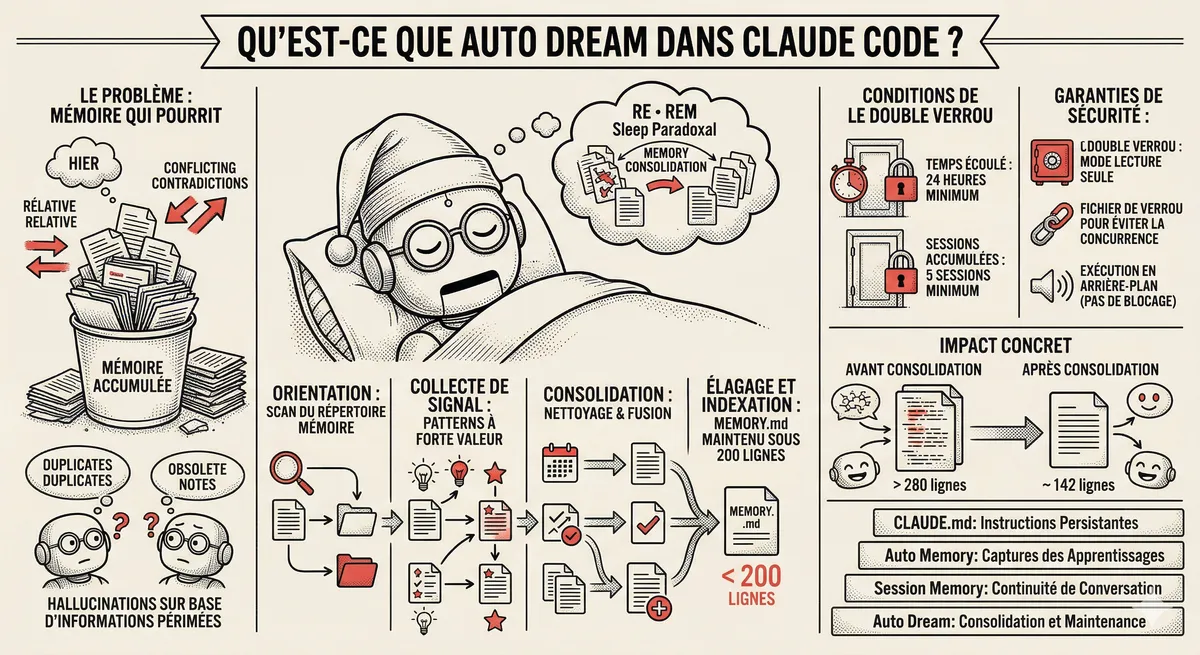
Claude Code Dream & Auto Dream: Automatic Memory Consolidation
After 20 sessions, Auto Memory notes become a mess. Auto Dream solves this by automatically consolidating Claude Code's memory: deduplication, stale entry removal, relative-to-absolute date conversion.
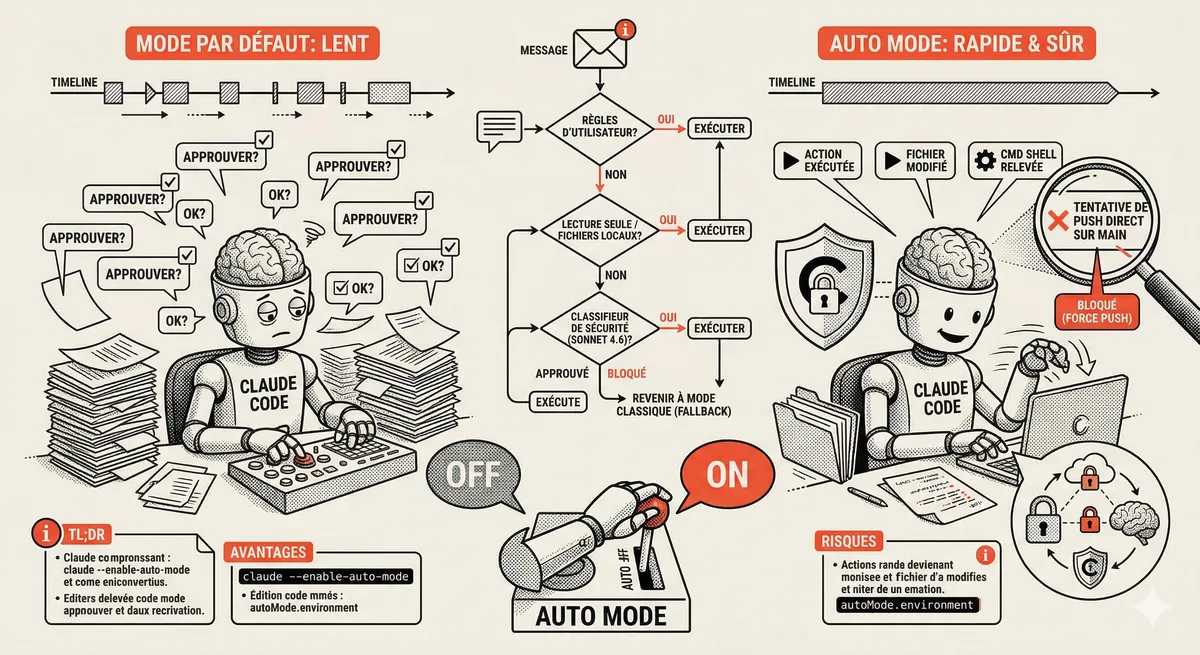
Claude Code Auto Mode: Autonomy Without the Risk
Auto Mode in Claude Code eliminates permission interruptions while keeping a safety net. A classifier analyzes every action before execution and blocks destructive operations. The sweet spot between approving everything and letting everything through.
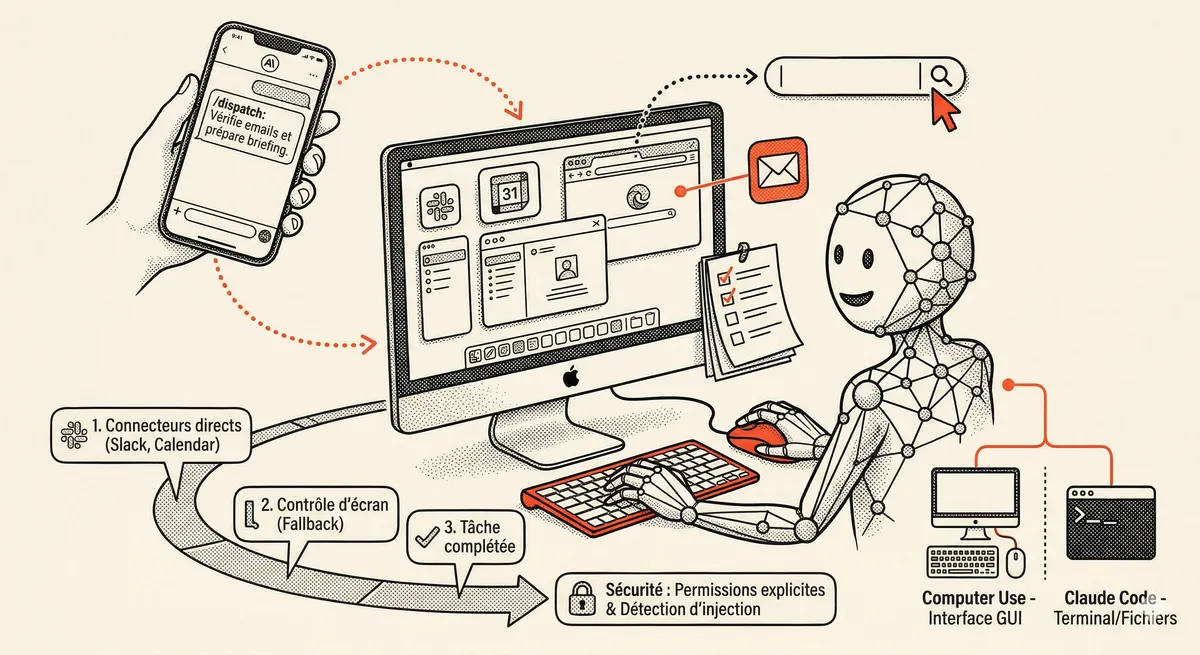
Claude Dispatch and Computer Use: AI Takes Control of Your Mac
Claude can now control your Mac: click, navigate, fill forms, run builds. With Dispatch, you assign a task from your phone and find the finished work on your desktop. Research preview, macOS only.
Claude Code Training
Master Claude Code fundamentals in 1 day with our expert instructors. 60% hands-on practice on real-world cases.
Discover the training