AI Agents and Software Developmentfrom experimentation to risk control
SFEIR and Docker join forces for this session. Coding agents no longer just suggest: they read the repository, run commands and reach your secrets. Stéphane Montri (Docker) and Seifeddin Mansri (SFEIR) review how teams use them, the risks involved, and how to keep these agents under control with Docker.


What you will discover:
A program structured in key moments to leave with a clear vision
Faire le point sur les usages
Des assistants qui complètent le code aux agents qui lisent un dépôt, lancent des commandes et proposent des pull requests : où en sont réellement les équipes de développement.
Identifier les risques concrets
Commandes exécutées sur le poste, accès aux secrets, injection de prompt, dépendances non vérifiées : les risques propres à un agent qui agit, et pas seulement qui suggère.
Encadrer l'usage avec Docker
Isoler l'exécution des agents et maîtriser ce à quoi ils accèdent, pour passer de l'expérimentation individuelle à un usage maîtrisé à l'échelle de l'entreprise.
Our speakers

Stéphane Montri
Senior Partner Solutions Engineer, Docker
Stéphane est Senior Partner Solutions Engineer chez Docker. Il apporte le point de vue de Docker sur la sécurisation et la maîtrise de l'usage des agents IA de développement.
LinkedIn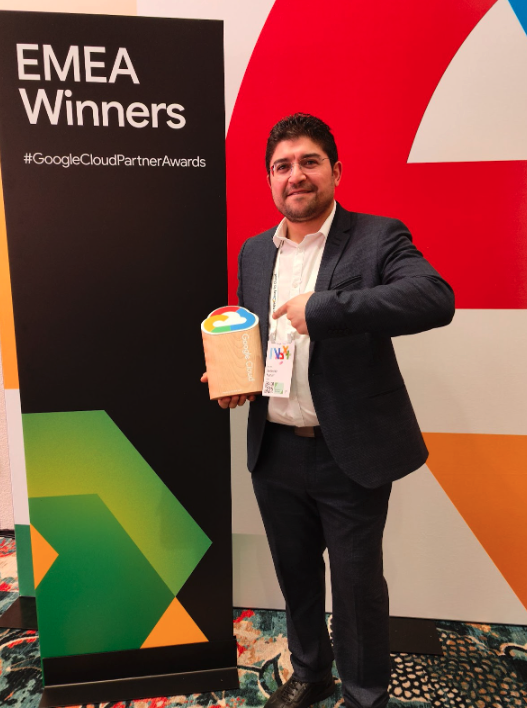
Seifeddin Mansri
CTO Cloud, SFEIR
Seifeddin est CTO Cloud de SFEIR, responsable des activités Cloud Infrastructure, DevOps et Sécurité. Google Developer Expert (GDE) Google Cloud depuis 2022, il est aussi formateur officiel Google Cloud et Kubernetes.
LinkedInThis webinar is made for you
In 1 hour, take stock of how AI agents are used in your development teams, the risks they introduce and the concrete ways to keep them under control.
Your profile
What you will learn
Training program
A dense and actionable format, structured in key moments
Où en est l'usage des agents IA dans le développement ?
Des assistants de complétion aux agents qui lisent un dépôt, exécutent des commandes, lancent les tests et proposent des pull requests. Ce que les équipes en font réellement, et ce qui a changé dans la façon de coder.
Les risques d'un agent qui agit
Un agent de développement n'est pas un simple assistant : il agit avec les droits du développeur, sur son poste et sur ses outils. Les principaux risques à connaître avant de généraliser son usage.
Sécuriser et maîtriser l'usage des agents avec Docker
Comment Docker permet d'isoler l'exécution des agents et de contrôler ce à quoi ils accèdent, pour garder le gain de productivité sans exposer le poste du développeur ni le système d'information.
L'expertise SFEIR pour accompagner les entreprises
Comment SFEIR accompagne les entreprises dans le passage de l'expérimentation à un usage maîtrisé des agents de développement, avec des formations pour les équipes.
Vos questions
En direct. Vos questions, vos cas concrets, vos contraintes de sécurité.
Register for the webinar
Seats are limited. Reserve yours to receive the connection link.
Go further
This event gave you the foundations. Turn this discovery into operational skills for your teams through SFEIR Institute trainings.
AI-Augmented Developer
Accelerate the productivity of your development teams with Agentic Coding. In a market where development speed and code quality make the difference, this training transforms your developers into "augmented developers," capable of leveraging the most advanced AI agents. Focused on real-world use cases, the training emphasizes immediate value creation and concrete improvement in developer productivity. Participants leave with methods, workflows, and assets directly applicable to their corporate projects. Your teams will learn to orchestrate and collaborate with intelligent agents to generate reliable and maintainable code, automate testing and documentation, accelerate refactoring and bug resolution, and standardize AI-assisted development practices. The training is adapted to the market-leading tools (Claude Code, Gemini CLI, GitHub Copilot, Cursor AI, etc.) and teaches participants to build their own custom business agents. Note: the choice of tools is updated according to the most relevant and mature solutions on the market. By adopting this approach, your teams will move from "vibe coding" to a structured agentic methodology, ensuring code quality, security, and maintainability while drastically accelerating delivery. At the end of this training, the final assessment in the form of a certification test allows participants to obtain the SFEIR Certified AI-Augmented Developer certification.
Claude Code Training
Boost your productivity with Claude Code, Anthropic's CLI tool for AI-assisted development. After installing and configuring Claude Code on your workstation, you'll learn basic interactions: creating effective CLAUDE.md files, mastering Plan Mode to review refactorings before execution, and generating unit and integration tests. You'll discover how to organize your documentation and manage prompts with modular rules in .claude/rules/. You'll explore sub-agents and skills: creating autonomous agents to parallelize tasks, orchestrating sequential and parallel patterns, and developing reusable skills to automate your workflows. Finally, you'll master essential commands and tips for maximum daily productivity. Hands-on training with 60% labs on real-world scenarios.
Docker Fundamentals
Solid foundations for deploying and containerizing your applications. This introductory training covers the terminology and concepts of containers and Docker, the development and deployment of software in containers, running containerized applications, and orchestrating distributed applications at scale with Swarm and Kubernetes.
Frequently asked questions
Oui, l'inscription est entièrement gratuite. Vous recevrez le lien de connexion par email après inscription.
Aux développeurs, tech leads et architectes qui utilisent ou testent des agents IA, mais aussi aux équipes DevOps et plateforme, aux RSSI et aux DSI qui doivent en encadrer l'usage.
Non, aucun prérequis. Le webinaire commence par un état des lieux des usages avant d'aborder les risques et les moyens de les maîtriser.
Des agents de code au sens large : ceux qui, au-delà de la suggestion, lisent un dépôt, exécutent des commandes et modifient des fichiers, que ce soit en ligne de commande ou dans l'IDE.
Un agent qui exécute du code a besoin d'un environnement d'exécution. Les conteneurs permettent de l'isoler du poste du développeur et de définir précisément ce à quoi il accède : fichiers, réseau, secrets. C'est l'objet de la troisième partie du webinaire.
Non, c'est tout le propos du webinaire : passer de l'expérimentation à un usage maîtrisé, plutôt que de choisir entre tout autoriser et tout interdire.
Oui, un lien vers le replay sera envoyé à tous les inscrits après le webinaire.
Pour prolonger le webinaire : Développeur Augmenté par l'IA, Formation Claude Code et Docker Les fondamentaux.